Meaning of This Ritual
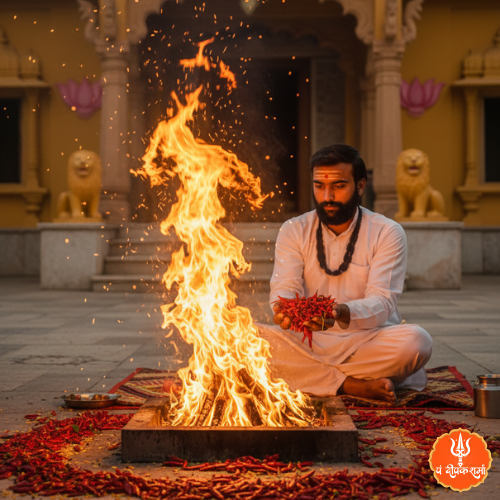
Mirchi Hawan, a sacred ritual dedicated to Devi Baglamukhi, holds immense significance in Vedic traditions. The term ‘Mirchi’ refers to chili, a potent symbol of protection and removal of negativity. In this hawan, the fiery essence of the chili is invoked to ward off enemies and obstacles that may hinder one’s progress. This ritual is particularly revered for its ability to create a protective shield around the devotee, ensuring that malevolent forces are kept at bay.
In essence, the Mirchi Hawan is not merely about the physical act of burning chilies; it is a spiritual invocation that channels divine energies to cleanse the environment and the devotee’s aura. The flames of the hawan symbolize the destruction of negativity, while the offerings made during the ritual serve as a means of appeasing the divine. Thus, this hawan is a powerful tool for those seeking relief from adversities and a path towards spiritual growth.
Performing Mirchi Hawan with devotion and sincerity can lead to profound changes in one’s life, fostering a sense of peace and security. It is a reminder of the divine presence that guides and protects us, encouraging devotees to trust in the process and the blessings that follow.
How This Ritual Helps
The Mirchi Hawan serves multiple purposes, primarily focusing on enemy removal and protection. Many devotees seek this hawan when faced with challenges posed by rivals, whether in personal or professional spheres. By invoking the blessings of Devi Baglamukhi, practitioners believe that they can neutralize the negative influences of their adversaries.
Moreover, this hawan is also beneficial for those experiencing mental turmoil or emotional distress. The act of performing the hawan helps to clear the mind and create a tranquil environment, allowing individuals to regain their focus and clarity. The sacred fire acts as a purifying agent, transforming negative energies into positive vibrations that uplift the spirit.
In addition to personal protection, Mirchi Hawan is often performed for collective well-being, such as in families or communities facing strife. The communal aspect of the hawan fosters unity and strengthens bonds, reminding participants of the power of collective prayer and intention.
Mythological Background
The roots of Mirchi Hawan are deeply embedded in Hindu mythology, particularly in the narratives surrounding Devi Baglamukhi. She is one of the ten Mahavidyas, revered for her ability to control and subdue enemies. According to ancient texts, Devi Baglamukhi embodies the power of speech and silence, making her a formidable force against those who wish to harm others.
One popular legend recounts how Devi Baglamukhi subdued a powerful demon who threatened the peace of the heavens. With her divine intervention, she transformed the demon’s malice into a protective force for her devotees. This story illustrates the essence of the Mirchi Hawan, where the fiery nature of the chili symbolizes the fierce protection that Devi Baglamukhi offers to her followers.
Furthermore, the use of chili in rituals is not arbitrary; it is believed that the heat of the chili represents the burning away of ignorance and negativity. Thus, the Mirchi Hawan serves as a reminder of the transformative power of devotion and the divine grace that accompanies sincere worship.
Who Should Perform This
Mirchi Hawan is particularly beneficial for individuals facing adversities in their lives, whether they are dealing with personal conflicts, professional rivalries, or even legal challenges. Those who feel overwhelmed by negative energies or hostile environments can find solace in this ritual. It is also recommended for individuals seeking to enhance their spiritual protection and create a harmonious atmosphere around them.
Moreover, this hawan is suitable for families experiencing discord or misunderstandings. By performing the Mirchi Hawan together, family members can foster unity and understanding, paving the way for healing and reconciliation. It is a collective effort that not only addresses individual concerns but also strengthens familial bonds.
In essence, anyone who seeks relief from negativity, whether it be from external sources or internal struggles, can benefit from the Mirchi Hawan. It is a powerful spiritual practice that encourages devotees to take charge of their lives and seek divine intervention for their challenges.
Step-by-Step Vidhi (Very Detailed)
To perform the Mirchi Hawan, one must follow a detailed Vedic procedure that ensures the ritual is conducted with reverence and precision. The first step involves preparing the hawan kund, a sacred fire pit that serves as the focal point of the ritual. It should be made of clay or metal and placed in a clean, auspicious location.
Next, gather the necessary materials, including dried red chilies, ghee (clarified butter), wood for the fire, and other offerings such as flowers and grains. It is essential to have a clean and pure mindset before beginning the ritual, as this sets the tone for the invocation of divine energies.
Once everything is prepared, light the fire in the hawan kund using the wood and ghee. As the flames rise, recite the appropriate mantras dedicated to Devi Baglamukhi. The chanting of these mantras is crucial, as it aligns the devotee’s intentions with the divine energies being invoked. Offer the dried chilies into the fire while visualizing the destruction of negativity and obstacles. This act symbolizes the surrender of all adversities to the divine.
Continue to offer ghee and other offerings into the fire while chanting the mantras. This process should be done with utmost devotion, allowing the flames to carry your prayers to the heavens. After the hawan is complete, it is customary to perform aarti and offer gratitude to Devi Baglamukhi for her blessings.
Mantra for This Ritual
The mantra associated with the Mirchi Hawan is:
ॐ ह्लीं बगलामुखि सर्व शत्रुस्तम्भनाय स्वाहा
Transliteration: Om Hleem Baglamukhi Sarva Shatrusambhanaya Swaha
This powerful mantra invokes the protective energies of Devi Baglamukhi, specifically aimed at subduing enemies and removing obstacles. The syllable ‘Hleem’ is a seed sound that represents the essence of the goddess, while ‘Sarva Shatrusambhanaya’ translates to the subjugation of all enemies. The term ‘Swaha’ signifies the offering made into the sacred fire, completing the ritualistic act.
Chanting this mantra with sincerity and focus can amplify the effects of the Mirchi Hawan. It is recommended to recite it multiple times during the ritual, allowing the vibrations of the mantra to permeate the environment and create a protective aura around the devotee.
In addition to its protective qualities, this mantra also serves as a reminder of the inner strength and resilience that resides within each individual. By invoking Devi Baglamukhi’s blessings, devotees are encouraged to confront their challenges with courage and faith.
Do’s & Don’ts
When performing the Mirchi Hawan, there are certain do’s and don’ts that devotees should keep in mind to ensure the ritual’s efficacy. Firstly, it is essential to approach the hawan with a pure heart and clear intentions. Devotees should take the time to meditate and focus on their desires before beginning the ritual.
It is advisable to perform the hawan on auspicious days, such as during the waxing moon or on specific festivals dedicated to Devi Baglamukhi. Avoid performing the hawan during inauspicious times, as this may hinder the effectiveness of the ritual. Additionally, ensure that the space where the hawan is conducted is clean and free from distractions.
On the other hand, devotees should refrain from using any impure materials or offerings that do not align with the sanctity of the ritual. Avoid engaging in negative thoughts or actions during the hawan, as this can counteract the positive energies being invoked. Lastly, it is crucial to express gratitude after the ritual, acknowledging the blessings received from Devi Baglamukhi.
When to Perform
The Mirchi Hawan can be performed at any time when one feels the need for protection or relief from adversities. However, certain auspicious days are particularly favorable for conducting this hawan. For instance, performing the hawan on the day of Navratri, especially during the worship of Devi Baglamukhi, is considered highly beneficial.
Additionally, it is recommended to perform the Mirchi Hawan during the waxing phase of the moon, as this is believed to enhance the potency of the ritual. Devotees may also choose to conduct the hawan on their birthdays or during significant life events when they seek divine blessings for new beginnings.
Ultimately, the best time to perform the Mirchi Hawan is when the devotee feels a deep calling to seek the goddess’s protection and guidance. Listening to one’s intuition and aligning with the divine energies is key to the success of this sacred ritual.
How Pandit Deepak Sharma can help
Pandit Deepak Sharma, with his extensive experience in performing Baglamukhi rituals, can provide invaluable guidance for those seeking to conduct the Mirchi Hawan. His deep understanding of Vedic traditions ensures that the hawan is performed with the utmost authenticity and devotion, adhering to all necessary protocols.
By consulting with Pandit Deepak Sharma, devotees can gain insights into the specific requirements for their hawan, including the selection of materials and the appropriate mantras to chant. His personalized approach allows for a tailored experience that resonates with the individual needs of each devotee, ensuring that the ritual is impactful and meaningful.
Moreover, Pandit Deepak Sharma’s presence during the hawan can enhance the spiritual atmosphere, as his blessings and guidance help to amplify the energies being invoked. For those who may feel uncertain about performing the ritual on their own, seeking the assistance of an experienced pandit can provide reassurance and confidence in the process.
Nalkheda Temple Connection
The Nalkheda Temple, dedicated to Devi Baglamukhi, serves as a significant spiritual hub for devotees seeking to perform the Mirchi Hawan. The temple’s sacred ambiance and rich history create an ideal setting for conducting this powerful ritual. Many devotees travel to Nalkheda to seek the blessings of the goddess, believing that the energy of the temple enhances the efficacy of their prayers.
At the Nalkheda Temple, Pandit Deepak Sharma and his team conduct various rituals, including the Mirchi Hawan, ensuring that each ceremony is performed with reverence and adherence to Vedic traditions. The temple’s serene environment allows devotees to immerse themselves in spiritual practices, fostering a deeper connection with Devi Baglamukhi.
Visiting the Nalkheda Temple not only provides an opportunity to perform the Mirchi Hawan but also allows devotees to participate in other sacred activities and receive the blessings of the goddess. The temple stands as a testament to the enduring faith and devotion of countless individuals who have sought solace and guidance through the divine grace of Devi Baglamukhi.
FAQ
What is the significance of Mirchi Hawan?
Mirchi Hawan holds profound significance as a ritual aimed at removing negativity and protecting devotees from adversities. The use of chilies symbolizes the burning away of harmful energies, while invoking the blessings of Devi Baglamukhi enhances the protective aura around the individual. This hawan is particularly beneficial for those facing challenges posed by rivals or experiencing emotional turmoil.
Through the act of offering chilies into the sacred fire, devotees surrender their fears and obstacles to the divine, allowing for transformation and healing. The ritual serves as a reminder of the power of faith and devotion, encouraging individuals to trust in the process and the blessings that follow.
Can anyone perform the Mirchi Hawan?
Yes, anyone seeking protection or relief from adversities can perform the Mirchi Hawan. It is particularly beneficial for individuals dealing with conflicts, whether personal or professional. Families experiencing discord can also benefit from conducting the hawan together, fostering unity and understanding among members.
While anyone can perform the hawan, it is essential to approach the ritual with sincerity and a pure heart. Devotees are encouraged to meditate on their intentions before beginning the ritual, ensuring that their focus aligns with the divine energies being invoked.
What materials are needed for the Mirchi Hawan?
To perform the Mirchi Hawan, several materials are required, including dried red chilies, ghee (clarified butter), wood for the fire, and other offerings such as flowers and grains. The hawan kund, or fire pit, should be made of clay or metal and placed in a clean, auspicious location.
Gathering these materials in advance ensures that the ritual can be conducted smoothly and without interruptions. It is important to use pure and natural materials that align with the sanctity of the hawan, enhancing its effectiveness and spiritual significance.
How can I ensure the effectiveness of the Mirchi Hawan?
To ensure the effectiveness of the Mirchi Hawan, devotees should approach the ritual with a pure heart and clear intentions. Performing the hawan on auspicious days, such as during Navratri or the waxing moon, can enhance its potency. Additionally, maintaining a clean and distraction-free environment during the ritual is crucial.
Engaging in sincere prayer and meditation before and during the hawan allows devotees to align their energies with the divine. Expressing gratitude after the ritual is also essential, acknowledging the blessings received from Devi Baglamukhi and reinforcing the connection with the divine.
Is it necessary to have a pandit perform the Mirchi Hawan?
While it is not strictly necessary to have a pandit perform the Mirchi Hawan, seeking the guidance of an experienced pandit can enhance the spiritual atmosphere and ensure that the ritual is conducted correctly. Pandit Deepak Sharma, with his extensive knowledge of Vedic traditions, can provide invaluable insights and support throughout the process.
Having a pandit present can also amplify the energies being invoked, as their blessings and expertise contribute to the overall effectiveness of the hawan. For those who may feel uncertain about performing the ritual on their own, consulting with a pandit can provide reassurance and confidence in the process.
Recommended Reading / Further Exploration
- Baglamukhi Havan for Overcoming Obstacles: A Divine Ritual for Success
- Baglamukhi Havan: A Divine Ritual for Success and Spiritual Strength
- Shatrunashak Havan: Beginner to Pro in One Detailed Guide
- Enemy Removal Havan: Beginner to Pro in One Detailed Guide
- Common Mistakes in Court Case Havan and How to Fix Them