Meaning of This Ritual
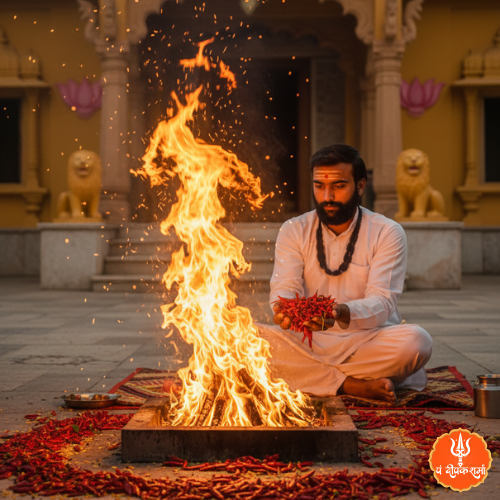
The Mirchi Hawan, a sacred ritual dedicated to Devi Baglamukhi, embodies the essence of spiritual cleansing and protection. In this hallowed ceremony, the use of red chilies symbolizes the removal of negativity and the suppression of adversaries. The act of offering these chilies into the sacred fire is a powerful invocation for the divine blessings of Baglamukhi Mata, who is revered for her ability to silence enemies and protect her devotees from harm. This ritual is not merely a practice; it is a heartfelt plea for divine intervention and support.
In the context of Vedic traditions, the Mirchi Hawan serves as a means to channel positive energies while dispelling the malevolent forces that may be at play in one’s life. The flames of the hawan represent the transformative power of fire, which purifies and sanctifies the offerings made to the divine. Each element of this ritual is steeped in symbolism, reinforcing the devotee’s faith and connection to the divine feminine energy of Baglamukhi.
Through the Mirchi Hawan, devotees seek not only protection but also empowerment. The ritual acts as a catalyst for personal strength, enabling individuals to face challenges with courage and resilience. The blessings of Baglamukhi Mata are believed to instill confidence, ensuring that devotees can navigate through life’s adversities with grace and fortitude.
How This Ritual Helps
The Mirchi Hawan is particularly beneficial for those facing obstacles posed by enemies, whether in personal or professional spheres. By performing this ritual, devotees invoke the protective energies of Baglamukhi Mata, who is known for her ability to thwart adversaries and bring peace to tumultuous situations. The act of offering red chilies into the sacred fire symbolizes the burning away of negativity and the silencing of harmful influences.
Moreover, this hawan is essential for individuals entangled in legal disputes or conflicts. The divine blessings sought through this ritual are believed to bring clarity and resolution, guiding devotees toward favorable outcomes. As the hawan progresses, the atmosphere becomes charged with spiritual energy, creating a protective shield around the devotee, which is instrumental in overcoming challenges.
Additionally, the Mirchi Hawan fosters a sense of community and collective strength when performed in groups. The shared intention of the participants amplifies the energy of the ritual, creating a powerful force for good. This communal aspect not only enhances the spiritual experience but also reinforces the bonds of kinship and support among devotees.
Mythological Background
In Hindu mythology, Devi Baglamukhi is one of the ten Mahavidyas, embodying the power of knowledge and wisdom. She is often depicted as a fierce goddess who wields a tongue of fire, symbolizing her ability to silence enemies and protect her devotees from harm. The Mirchi Hawan draws upon this potent mythology, invoking the goddess’s strength to combat adversities.
The narrative surrounding Baglamukhi is rich with tales of her divine interventions. One such story recounts how she helped the gods defeat demons who threatened to disrupt cosmic order. Her unwavering resolve and fierce protection serve as an inspiration for devotees seeking her blessings through the Mirchi Hawan. By aligning themselves with her divine energy, devotees can harness her power to overcome challenges and adversaries.
Furthermore, the use of red chilies in the hawan is deeply symbolic. In various cultures, chilies are associated with warding off evil and negativity. By incorporating this element into the ritual, devotees not only honor the goddess but also engage in a time-honored practice that has been passed down through generations. The Mirchi Hawan thus becomes a bridge connecting the devotee to the divine, steeped in rich mythology and tradition.
Who Should Perform This
The Mirchi Hawan is particularly beneficial for individuals facing conflicts, whether in personal relationships, workplace dynamics, or legal matters. Those who feel overwhelmed by adversaries or negativity in their lives are encouraged to participate in this ritual. It serves as a powerful means of seeking divine intervention and protection.
Moreover, this hawan is suitable for individuals who are embarking on new ventures or facing significant life transitions. The blessings of Baglamukhi Mata can provide the necessary strength and clarity to navigate these changes successfully. Whether one is starting a new job, entering a new relationship, or dealing with a challenging situation, the Mirchi Hawan offers a spiritual foundation for empowerment.
Additionally, families facing collective challenges, such as disputes or misunderstandings, can benefit from performing this hawan together. The communal aspect of the ritual fosters unity and reinforces the bonds of love and support among family members, creating a harmonious environment conducive to healing and resolution.
Step-by-Step Vidhi (Very Detailed)
The Vidhi for the Mirchi Hawan is a sacred process that requires careful adherence to Vedic traditions. To begin, the devotee must cleanse the space where the hawan will take place. This involves purifying the area with sacred water and chanting mantras to invite positive energies. A clean and serene environment is essential for the efficacy of the ritual.
Next, a hawan kund, or fire pit, is prepared. It is typically made of clay or metal and should be placed in an auspicious direction, preferably facing east. The kund is filled with sacred wood, such as mango or peepal, which is essential for the hawan fire. The wood is arranged in a specific manner to facilitate the fire’s ignition and to ensure that the offerings are consumed completely.
Once the kund is prepared, the devotee lights the fire using a sacred matchstick or a piece of wood from a previous hawan. As the flames rise, the devotee should chant the appropriate mantras, invoking the blessings of Baglamukhi Mata. The red chilies are then offered into the fire, accompanied by prayers for protection and the removal of adversaries. Each offering should be made with devotion and sincerity, as the energy of the ritual is amplified by the devotee’s intention.
Throughout the hawan, it is essential to maintain a focused and meditative state. The devotee may choose to recite specific mantras or prayers dedicated to Baglamukhi Mata, enhancing the spiritual atmosphere. The hawan should continue until all the offerings are made, and the fire is allowed to burn down completely, symbolizing the complete dissolution of negativity.
Mantra for This Ritual
The mantra associated with the Mirchi Hawan is:
ॐ ह्लीं बगलामुखि सर्व शत्रुस्तम्भनाय स्वाहा
Transliteration: Om Hleem Baglamukhi Sarva Shatrusambhanaya Swaha
This powerful mantra invokes the protective energies of Baglamukhi Mata, specifically aimed at silencing enemies and overcoming adversities. The syllable ‘Hleem’ is a seed sound that resonates with the divine feminine energy, while ‘Sarva Shatrusambhanaya’ translates to ‘for the silencing of all enemies.’ The concluding ‘Swaha’ signifies the offering made to the fire, completing the cycle of devotion.
Reciting this mantra during the Mirchi Hawan amplifies the intention behind the ritual. Each repetition serves to deepen the connection with the divine, inviting Baglamukhi Mata’s blessings into the devotee’s life. The mantra should be chanted with sincerity and focus, allowing the vibrations to permeate the surroundings and create a protective aura.
Do’s & Don’ts
When performing the Mirchi Hawan, there are certain do’s and don’ts that devotees should keep in mind to ensure the ritual’s effectiveness. Among the do’s, it is essential to approach the hawan with a pure heart and focused mind. Devotees should engage in prior purification, such as bathing and wearing clean clothes, to prepare themselves spiritually. It is also advisable to gather all necessary materials beforehand, including red chilies, ghee, and sacred wood, to avoid disruptions during the ritual.
Additionally, maintaining a calm and serene environment is crucial. Devotees should minimize distractions and create a sacred space conducive to spiritual practice. It is also beneficial to involve family members or close friends, as collective energy enhances the ritual’s potency. Sharing intentions and prayers can foster a sense of unity and support.
On the other hand, there are several don’ts to be aware of. Avoid performing the hawan in a hurried manner; each step should be executed with care and devotion. It is also important not to engage in negative thoughts or distractions during the ritual, as these can hinder the effectiveness of the offerings. Lastly, refrain from consuming non-vegetarian food or alcohol before and during the hawan, as such substances can disrupt the spiritual energies being invoked.
When to Perform
The Mirchi Hawan can be performed at any time, but certain auspicious days are particularly favorable. For instance, performing the hawan on a Tuesday or Saturday is considered highly beneficial, as these days are associated with strength and protection. Additionally, during the waxing phase of the moon (Shukla Paksha) is deemed auspicious for rituals aimed at overcoming obstacles and invoking blessings.
Moreover, devotees may choose to perform the Mirchi Hawan during significant life events, such as starting a new job, entering a new relationship, or facing legal challenges. The ritual serves as a protective measure, ensuring that the devotee is shielded from negativity and empowered to face challenges with confidence.
It is also advisable to consult with a knowledgeable pandit or spiritual guide to determine the most auspicious timing for the hawan based on individual circumstances. This personalized guidance can enhance the ritual’s effectiveness and align it with the devotee’s specific needs and intentions.
How Pandit Deepak Sharma can help
Pandit Deepak Sharma, with his extensive experience in performing Baglamukhi rituals, offers invaluable guidance for those seeking to conduct the Mirchi Hawan. His deep understanding of Vedic traditions ensures that the hawan is performed with utmost authenticity and devotion. By entrusting the ritual to Pandit Sharma, devotees can rest assured that every aspect will be meticulously attended to, from the preparation of the hawan kund to the chanting of the mantras.
Moreover, Pandit Sharma provides personalized consultations, helping devotees understand the significance of the ritual and its alignment with their spiritual goals. His compassionate approach fosters a nurturing environment, allowing devotees to express their concerns and intentions openly. This personalized attention enhances the spiritual experience, creating a deeper connection with Baglamukhi Mata.
In addition to performing the hawan, Pandit Sharma also offers ongoing support and guidance, helping devotees navigate the challenges they may face after the ritual. His wisdom and insights serve as a beacon of hope, empowering individuals to embrace their spiritual journey with confidence and faith.
Nalkheda Temple Connection
The Nalkheda Temple, dedicated to Devi Baglamukhi, is a sacred site where devotees gather to seek blessings and perform rituals. The temple’s serene environment and spiritual ambiance create a perfect backdrop for the Mirchi Hawan. By conducting the hawan at this revered location, devotees can tap into the temple’s powerful energies, enhancing the effectiveness of their prayers and offerings.
Visiting the Nalkheda Temple also provides devotees with the opportunity to connect with a community of like-minded individuals who share similar spiritual aspirations. The collective energy of the temple fosters a sense of belonging and support, reinforcing the bonds of devotion among participants. Engaging in rituals at the temple amplifies the spiritual experience, allowing devotees to immerse themselves fully in the divine presence of Baglamukhi Mata.
Furthermore, the temple’s historical significance adds depth to the Mirchi Hawan. As a site of pilgrimage, Nalkheda has been a beacon of hope for countless devotees seeking solace and protection. By performing the hawan at this sacred location, individuals can align themselves with the rich traditions and blessings that have been bestowed upon the temple over the centuries.
FAQ
What is the significance of the Mirchi Hawan?
The Mirchi Hawan holds profound significance as a ritual aimed at overcoming adversaries and dispelling negativity. By invoking the blessings of Devi Baglamukhi, devotees seek protection and empowerment in their lives. The use of red chilies symbolizes the burning away of harmful influences, making this hawan a powerful tool for spiritual cleansing and fortification.
Can anyone perform the Mirchi Hawan?
Yes, the Mirchi Hawan can be performed by anyone seeking to overcome challenges or adversities. It is particularly beneficial for those facing conflicts, whether in personal relationships or professional settings. Families facing collective challenges are also encouraged to participate in this hawan together, fostering unity and support.
How long does the Mirchi Hawan take?
The duration of the Mirchi Hawan can vary depending on the devotee’s intentions and the number of offerings made. Typically, the hawan may take anywhere from one to two hours. It is essential to approach the ritual with patience and devotion, allowing the process to unfold naturally without rushing.
What materials are needed for the Mirchi Hawan?
Essential materials for the Mirchi Hawan include red chilies, ghee, sacred wood, and a hawan kund. These items are integral to the ritual, and their preparation should be done with care and reverence. It is advisable to gather all materials beforehand to ensure a smooth and uninterrupted experience during the hawan.
Is it necessary to have a pandit perform the hawan?
While it is not mandatory to have a pandit perform the Mirchi Hawan, seeking the guidance of an experienced pandit, such as Pandit Deepak Sharma, can enhance the ritual’s effectiveness. A knowledgeable pandit ensures that the hawan is performed according to Vedic traditions, providing a deeper connection to the divine and amplifying the blessings received.
Can the Mirchi Hawan be performed at home?
Yes, the Mirchi Hawan can be performed at home, provided that the space is purified and conducive to spiritual practice. However, it is essential to approach the ritual with sincerity and devotion. If possible, involving family members or close friends can enhance the collective energy and support the ritual’s intentions.