Meaning of This Ritual
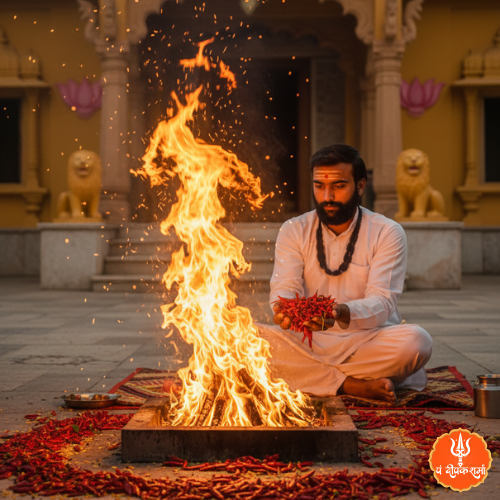
Mirchi Hawan, a sacred ritual dedicated to Devi Baglamukhi, is performed to remove obstacles and enemies from one’s life. The term ‘Mirchi’ translates to ‘chili’ in Hindi, symbolizing the burning away of negativity and adversities. In this hawan, the fiery essence of the chili is invoked to eliminate the presence of enemies and to bring forth protection and success. This ritual is deeply rooted in Vedic traditions and is often sought by devotees facing challenges in their personal or professional lives.
The essence of Mirchi Hawan lies in its ability to transform negative energies into positive outcomes. By invoking the divine blessings of Baglamukhi Mata, devotees seek her grace to shield them from harm and to ensure that their endeavors are met with success. The hawan is not merely a ritual; it is a profound spiritual practice that aligns the devotee’s intentions with the cosmic energies, facilitating a harmonious flow of positive vibrations.
In essence, Mirchi Hawan serves as a powerful tool for spiritual cleansing and empowerment. It is a call to the divine, asking for intervention in times of distress and a means to restore balance in one’s life. The flames of the hawan symbolize the burning away of all that is detrimental, making way for new beginnings and opportunities.
How This Ritual Helps
Mirchi Hawan is particularly beneficial for those who feel burdened by the presence of adversaries or negative influences. The ritual aims to create a protective shield around the devotee, ensuring that they are safeguarded from harm. By performing this hawan, individuals often report a sense of relief and a newfound strength to face challenges head-on. The divine energy invoked during the hawan acts as a catalyst for change, enabling devotees to overcome obstacles that have been hindering their progress.
Furthermore, this hawan is known to enhance one’s confidence and clarity of thought. As the negative energies are dispelled, devotees find themselves more focused and determined in their pursuits. The blessings of Baglamukhi Mata empower them to confront their fears and adversaries with courage and resolve. Many devotees have experienced significant improvements in their relationships, career paths, and overall well-being after participating in this sacred ritual.
In addition to personal empowerment, Mirchi Hawan also fosters a sense of community and support among participants. When performed collectively, the energy generated during the hawan amplifies the intentions of all involved, creating a powerful collective force for good. This communal aspect of the ritual enhances its effectiveness, as the combined prayers and energies resonate with the divine, bringing about transformative changes in the lives of the devotees.
Mythological Background
The significance of Mirchi Hawan is deeply rooted in Hindu mythology, particularly in the worship of Devi Baglamukhi. She is one of the ten Mahavidyas, revered for her power to control and eliminate enemies. According to ancient texts, Baglamukhi Mata embodies the divine feminine energy that can silence adversaries and protect her devotees from harm. Her association with the color yellow and the element of fire further emphasizes her role as a protector and a remover of obstacles.
One of the most notable legends surrounding Baglamukhi Mata involves her fierce battle against the demon Madan. In this tale, the demon represents the chaos and negativity that can infiltrate our lives. Baglamukhi, in her divine form, used her powers to subdue Madan, demonstrating her ability to conquer evil and restore order. This victory is celebrated through rituals like Mirchi Hawan, where devotees seek her blessings to overcome their own personal demons and adversities.
Moreover, the use of chili in the hawan symbolizes the burning away of negativity. In many cultures, chili is associated with protection and the warding off of evil spirits. By incorporating this element into the hawan, devotees invoke the fiery energy of Baglamukhi Mata, asking for her divine intervention to cleanse their lives of harmful influences. This mythological backdrop enriches the ritual, making it a powerful act of devotion and surrender to the divine will.
Who Should Perform This
Mirchi Hawan is particularly beneficial for individuals who are facing challenges posed by adversaries, whether in personal relationships, professional settings, or legal matters. Those who feel overwhelmed by negativity or who are experiencing a lack of progress in their lives may find solace and strength through this hawan. It is also recommended for individuals seeking clarity and direction in their life choices, as the ritual helps to dispel confusion and enhance focus.
Moreover, this hawan can be performed by anyone who wishes to invoke the protective blessings of Baglamukhi Mata. Whether you are a student facing examination pressures, a professional dealing with workplace conflicts, or an individual navigating personal challenges, Mirchi Hawan can serve as a powerful spiritual remedy. It is a call to the divine for support and guidance, making it accessible to all who seek her grace.
Families facing collective challenges, such as financial difficulties or health issues, can also benefit from participating in this hawan together. The collective energy generated during the ritual amplifies the intentions of all involved, creating a supportive environment that fosters healing and empowerment. Ultimately, anyone who feels the need for divine intervention in their lives is encouraged to consider performing Mirchi Hawan.
Step-by-Step Vidhi (Very Detailed)
To perform Mirchi Hawan, it is essential to follow a detailed Vedic vidhi that honors the traditions and rituals associated with Devi Baglamukhi. The process begins with the selection of an auspicious date and time, preferably during the waxing moon phase, as this is considered favorable for invoking positive energies.
1. **Preparation of the Havan Kund**: The first step involves preparing the havan kund, a sacred fire pit made of clay or metal. It should be placed in a clean and serene environment, preferably facing east. The kund is then filled with sacred materials, including dried wood, ghee, and samagri (a mixture of herbs and grains).
2. **Purification Rituals**: Before commencing the hawan, the area should be purified through a series of rituals. This includes sprinkling holy water and chanting purification mantras to cleanse the space of any negative energies. The devotee should also take a bath and wear clean, preferably yellow, clothes to honor the goddess.
3. **Invocation of Devi Baglamukhi**: Once the space is prepared, the devotee should sit in front of the havan kund and light the fire using a sacred matchstick or lighter. As the flames rise, the devotee should chant the following mantra: ॐ ह्लीं बगलामुखि सर्व शत्रुस्तम्भनाय स्वाहा (Om Hleem Baglamukhi Sarva Shatrustambhanaya Swaha). This mantra invokes the presence of Baglamukhi Mata and seeks her blessings for protection against enemies.
4. **Offering of Mirchi**: The next step involves offering whole dried chilies into the fire, symbolizing the burning away of adversaries. Each chili represents a specific challenge or enemy, and as it is offered, the devotee should visualize the removal of negativity from their life.
5. **Prayers and Offerings**: After the chilies are offered, the devotee should recite prayers and express their intentions to Devi Baglamukhi. This is a personal moment of connection, where the devotee can share their struggles and seek guidance. Additional offerings, such as flowers, fruits, and sweets, can also be placed in the havan kund as a gesture of gratitude.
6. **Concluding the Havan**: Once the offerings are complete, the devotee should conclude the hawan by performing aarti (a ceremonial light offering) to Devi Baglamukhi. This involves circling a lit lamp in front of the deity’s image while singing devotional songs. Finally, the remnants of the hawan should be collected and distributed among family members as prasad (blessed offerings).
Mantra for This Ritual
The primary mantra used during the Mirchi Hawan is ॐ ह्लीं बगलामुखि सर्व शत्रुस्तम्भनाय स्वाहा. This powerful mantra is a direct invocation to Devi Baglamukhi, asking for her divine intervention in silencing enemies and removing obstacles. Each syllable of the mantra carries profound significance, resonating with the energies of protection and empowerment.
**Transliteration**: Om Hleem Baglamukhi Sarva Shatrustambhanaya Swaha.
**Meaning**: The mantra can be broken down as follows: ‘ॐ’ (Om) represents the primordial sound of the universe, signifying the essence of the divine. ‘ह्लीं’ (Hleem) is a seed mantra associated with Baglamukhi, invoking her protective energies. ‘बगलामुखि’ (Baglamukhi) is the name of the goddess, while ‘सर्व’ (Sarva) means all, and ‘शत्रु’ (Shatru) refers to enemies. ‘स्तम्भनाय’ (Stambhanaya) translates to ‘to silence’ or ‘to immobilize,’ and ‘स्वाहा’ (Swaha) is an offering made to the fire, completing the invocation.
This mantra is recited multiple times during the hawan, enhancing its potency and aligning the devotee’s intentions with the divine will. The repetition of the mantra serves to deepen the connection with Baglamukhi Mata, inviting her blessings into the devotee’s life.
Do’s & Don’ts
When performing Mirchi Hawan, it is essential to adhere to certain do’s and don’ts to ensure the ritual is conducted properly and respectfully. Among the do’s, it is important to maintain a clean and sacred environment. The devotee should ensure that the space is free from clutter and negativity, as this enhances the effectiveness of the hawan. Additionally, wearing clean and preferably yellow clothing is recommended, as it symbolizes purity and devotion.
Another important aspect is to focus on your intentions during the hawan. Devotees should approach the ritual with a pure heart, sincerely seeking the blessings of Baglamukhi Mata. It is also beneficial to involve family members in the hawan, as collective prayers amplify the energy of the ritual. Offering heartfelt prayers and expressing gratitude after the hawan is also encouraged, as this fosters a deeper connection with the divine.
On the other hand, there are certain practices to avoid during the hawan. Engaging in negative thoughts or distractions can diminish the effectiveness of the ritual. It is crucial to remain focused and present, allowing the divine energies to flow freely. Additionally, avoid using impure or non-vegetarian items in the offerings, as this goes against the sanctity of the ritual. Lastly, refrain from discussing any negative experiences or adversities during the hawan; instead, maintain a positive mindset and visualize the removal of obstacles.
When to Perform
Mirchi Hawan can be performed at any time when one feels the need for divine intervention against adversaries. However, certain auspicious days are particularly favorable for this hawan. The waxing moon phase, especially during the Shukla Paksha (the bright fortnight), is considered ideal for invoking positive energies and blessings from Baglamukhi Mata. Additionally, specific festivals dedicated to Devi Baglamukhi, such as Navratri, are also excellent times to perform this hawan, as the energies of the goddess are believed to be heightened during these periods.
It is also advisable to perform the hawan during times of personal turmoil or when facing significant challenges. Whether it is a legal battle, workplace conflict, or personal strife, conducting Mirchi Hawan can serve as a spiritual remedy to alleviate the burdens and restore balance. Many devotees choose to perform this hawan at the beginning of a new venture or project, seeking the blessings of Baglamukhi Mata for success and protection.
Ultimately, the best time to perform Mirchi Hawan is when one feels a genuine call to seek the blessings of the goddess. The sincerity of intention is what truly matters, and performing the hawan with devotion and faith will yield the most profound results.
How Pandit Deepak Sharma can help
Pandit Deepak Sharma, an experienced Vedic practitioner, offers his expertise in conducting Mirchi Hawan and other rituals dedicated to Baglamukhi Mata. With over 25 years of experience, he possesses a deep understanding of the Vedic traditions and the significance of each ritual. His guidance ensures that the hawan is performed with utmost devotion and adherence to the traditional vidhi, maximizing its effectiveness.
By consulting with Pandit Deepak Sharma, devotees can gain personalized insights into their specific challenges and how the Mirchi Hawan can address them. He provides spiritual guidance tailored to individual needs, helping devotees to align their intentions with the divine energies invoked during the hawan. His compassionate approach fosters a supportive environment, allowing devotees to express their concerns and seek divine intervention with confidence.
Moreover, Pandit Deepak Sharma’s connection to Nalkheda Temple enhances the spiritual experience of the hawan. The temple is a sacred site dedicated to Devi Baglamukhi, and performing the hawan under his guidance ensures that the energies of the temple are channeled into the ritual. This connection amplifies the blessings received, making the Mirchi Hawan a truly transformative experience for devotees.
Nalkheda Temple Connection
Nalkheda Temple, located in the Agar Malwa district of Madhya Pradesh, is a revered site dedicated to Devi Baglamukhi. The temple is known for its spiritual significance and the transformative experiences reported by devotees who visit. Performing Mirchi Hawan at this sacred site enhances the ritual’s potency, as the energies of the temple resonate with the prayers and intentions of the devotees.
The temple is adorned with beautiful idols of Baglamukhi Mata, and the atmosphere is filled with devotion and reverence. Many devotees travel from far and wide to seek her blessings, especially during auspicious occasions. The connection between the temple and the hawan is profound, as the temple serves as a conduit for divine energies, amplifying the effects of the ritual.
Visiting Nalkheda Temple not only allows devotees to perform Mirchi Hawan but also offers an opportunity for darshan (viewing) of the goddess. This sacred experience fosters a deeper connection with Baglamukhi Mata, allowing devotees to immerse themselves in her divine presence. The temple’s serene environment provides a perfect backdrop for reflection and prayer, making it an ideal place to seek spiritual guidance and support.
FAQ
What is Mirchi Hawan?
Mirchi Hawan is a sacred ritual performed to invoke the blessings of Devi Baglamukhi for the removal of enemies and obstacles. The ritual involves offering dried chilies into the sacred fire, symbolizing the burning away of negativity. It is a powerful spiritual practice that aligns the devotee’s intentions with the divine energies, facilitating a harmonious flow of positive vibrations.
Who can perform Mirchi Hawan?
Anyone facing challenges posed by adversaries or seeking protection can perform Mirchi Hawan. It is particularly beneficial for individuals dealing with personal conflicts, workplace issues, or legal matters. Families can also participate collectively to amplify the energy of the ritual, fostering a supportive environment for healing and empowerment.
What are the benefits of performing Mirchi Hawan?
Mirchi Hawan offers numerous benefits, including the removal of obstacles, enhanced confidence, and clarity of thought. Devotees often report a sense of relief and newfound strength to confront challenges. The ritual acts as a protective shield, safeguarding individuals from harm and fostering positive outcomes in their endeavors.
When is the best time to perform this hawan?
The best time to perform Mirchi Hawan is during the waxing moon phase, particularly in Shukla Paksha. Specific festivals dedicated to Devi Baglamukhi, such as Navratri, are also favorable times. Ultimately, the sincerity of intention is what matters most, and the hawan can be performed whenever one feels the need for divine intervention.
How does Pandit Deepak Sharma assist in this ritual?
Pandit Deepak Sharma offers his expertise in conducting Mirchi Hawan, ensuring that the ritual is performed with devotion and adherence to traditional Vedic practices. His personalized guidance helps devotees align their intentions with the divine energies invoked during the hawan, enhancing its effectiveness and spiritual significance.
What is the significance of using chilies in the hawan?
Chilies symbolize the burning away of negativity and adversities. Each chili offered in the hawan represents a specific challenge or enemy, and as it is burned, the devotee visualizes the removal of these obstacles. This powerful symbolism enhances the transformative nature of the ritual, inviting the protective blessings of Baglamukhi Mata.