Meaning of This Ritual
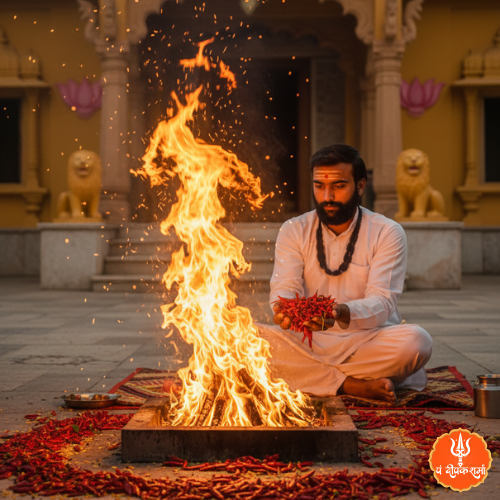
The Baglamukhi havan is a sacred Vedic ritual dedicated to Devi Baglamukhi, one of the ten Mahavidyas. This ritual is performed with the intention of invoking the divine blessings of the goddess, who is revered for her power to remove obstacles and grant victory over adversaries. The term ‘Havan’ refers to the fire ritual where offerings are made into the sacred fire, symbolizing the surrender of one’s desires and the purification of the soul. Through this act, devotees seek the goddess’s grace to overcome challenges in their lives.
In essence, the Baglamukhi Havan is not merely a ritual; it is a profound spiritual practice that connects the devotee with the divine energy of Baglamukhi Mata. It embodies the principles of surrender, devotion, and the pursuit of spiritual truth. The offerings made during the Havan, including ghee, grains, and herbs, are believed to carry the prayers of the devotees to the goddess, who then bestows her blessings upon them.
This ritual is particularly significant for those facing legal battles, career challenges, or personal conflicts. It serves as a powerful tool for protection and empowerment, allowing devotees to invoke the goddess’s strength and wisdom in navigating life’s difficulties. The Havan is a reminder of the divine presence in our lives and the importance of seeking spiritual guidance in times of need.
How This Ritual Helps
The Baglamukhi Havan is known for its transformative effects on the lives of devotees. By performing this ritual, individuals can experience a sense of relief from various forms of negativity and obstacles. The primary focus of the Havan is to invoke the protective energies of Devi Baglamukhi, who is known to shield her devotees from harm and misfortune. This is particularly beneficial for those facing legal issues, as the goddess is believed to grant victory in court cases and disputes.
Moreover, the Havan serves as a means of spiritual purification. The act of making offerings into the fire symbolizes the burning away of negative energies and karmic debts. This purification process allows devotees to align themselves with higher spiritual frequencies, fostering a sense of peace and clarity in their lives. As the smoke rises from the sacred fire, it is said to carry the intentions and prayers of the devotees to the heavens, creating a direct connection with the divine.
Additionally, the Baglamukhi Havan can enhance one’s personal power and confidence. By invoking the goddess’s blessings, devotees often find themselves better equipped to handle challenges and adversities. This empowerment can manifest in various aspects of life, including career growth, improved relationships, and overall well-being. The ritual acts as a catalyst for positive change, encouraging individuals to take charge of their destinies with the support of divine grace.
Mythological Background
The mythology surrounding Devi Baglamukhi is rich and profound, reflecting her significance within the Hindu pantheon. She is often depicted as a radiant goddess, seated on a throne, holding a tongue in her hand, symbolizing her power to control speech and communication. According to ancient texts, Baglamukhi is known as the goddess of knowledge and wisdom, and her worship is believed to bestow clarity and insight upon her devotees.
One of the most revered stories associated with Baglamukhi is her battle against the demon Madan. The demon, who represented ignorance and chaos, threatened the cosmic order. In response to the prayers of the gods, Baglamukhi manifested to defeat him. With her divine powers, she silenced the demon, restoring balance and harmony to the universe. This victory not only established her as a formidable force against evil but also highlighted her role as a protector of truth and righteousness.
Furthermore, Baglamukhi is often associated with the concept of ‘Shakti,’ or divine feminine energy. She embodies the qualities of strength, resilience, and wisdom, making her a powerful ally for those seeking guidance and support in their lives. The worship of Baglamukhi is deeply rooted in the belief that by surrendering to her will, devotees can overcome their fears and insecurities, ultimately leading to spiritual liberation.
Who Should Perform This
The Baglamukhi Havan is suitable for anyone seeking spiritual growth, protection, and resolution of conflicts. It is particularly beneficial for individuals facing legal challenges, career obstacles, or personal disputes. Those who feel overwhelmed by negative energies or adversarial situations can find solace and empowerment through this ritual. It is also recommended for individuals who wish to enhance their communication skills and assertiveness, as Baglamukhi is known for her ability to control speech and influence outcomes.
Moreover, the Havan can be performed by individuals at any stage of life, whether they are students preparing for exams, professionals seeking career advancement, or anyone in need of spiritual guidance. Families facing collective challenges, such as financial difficulties or health issues, can also benefit from the collective energy generated during the Havan. By coming together in devotion, families can strengthen their bonds and invoke the blessings of the goddess for collective well-being.
Ultimately, the Baglamukhi Havan is a sacred opportunity for all devotees to connect with the divine and seek the goddess’s blessings. It is a reminder that through faith, devotion, and the performance of Vedic rituals, individuals can navigate life’s challenges with grace and strength.
Step-by-Step Vidhi (Very Detailed)
Performing the Baglamukhi Havan requires adherence to specific Vedic rituals to ensure its efficacy. The following steps outline the detailed process of conducting this sacred Havan:
1. Preparation of the Havan Kund: Begin by selecting a clean and sacred space for the Havan. Construct a Havan Kund (fire pit) using bricks or clay, ensuring it is square or rectangular in shape. The dimensions should be appropriate for the number of participants involved. The Kund should be consecrated with holy water and covered with a clean cloth to maintain purity.
2. Gathering of Materials: Collect all necessary materials, including ghee (clarified butter), samagri (a mixture of sacred herbs and grains), and the specific offerings for the Havan. It is essential to have a variety of items such as rice, barley, and sesame seeds, along with flowers and fruits for the puja. Prepare a sacred thread (yajnopavita) to wear during the ritual, symbolizing purity and devotion.
3. Invocation of Deities: Before commencing the Havan, perform a small puja to invoke the presence of Devi Baglamukhi and other deities. Light a diya (lamp) and offer flowers, fruits, and incense while reciting relevant mantras. This step is crucial for establishing a divine connection and inviting the goddess’s blessings into the ritual.
4. Lighting the Sacred Fire: Once the preparations are complete, light the sacred fire in the Havan Kund using dry wood and ghee. The fire symbolizes the divine presence and serves as the medium for offerings. As the flames rise, chant the appropriate mantras to invoke the goddess’s energy and blessings.
5. Making Offerings: Begin making offerings into the fire, starting with ghee and samagri. Each offering should be accompanied by the recitation of specific mantras dedicated to Baglamukhi. For instance, while offering ghee, chant ॐ ह्लीं बगलामुखि सर्वविघ्न नाशाय ह्लीं (Om Hleem Baglamukhi Sarvavighna Nashaya Hleem), invoking her energy to remove obstacles. Continue this process, offering various items while maintaining focus and devotion.
6. Concluding the Havan: After completing the offerings, conclude the Havan by performing aarti (waving of light) in front of the fire. Offer prayers of gratitude to Devi Baglamukhi for her blessings. It is customary to distribute prasad (blessed food) to all participants, symbolizing the sharing of divine grace.
7. Closing Prayers: Finally, recite closing prayers and mantras to seal the energy generated during the Havan. Thank the goddess for her presence and guidance, and seek her continued blessings in your life.
Mantra for This Ritual
The primary mantra associated with the Baglamukhi Havan is ॐ ह्लीं बगलामुखि सर्वविघ्न नाशाय ह्लीं (Om Hleem Baglamukhi Sarvavighna Nashaya Hleem). This mantra is a powerful invocation for removing obstacles and achieving success in various endeavors.
In transliteration, it reads as: Om Hleem Baglamukhi Sarvavighna Nashaya Hleem. The meaning of this mantra can be understood as follows:
The syllable ॐ (Om) represents the primordial sound of the universe, embodying the essence of creation and the divine. ह्लीं (Hleem) is a bija (seed) mantra associated with Baglamukhi, symbolizing her protective and transformative powers. The phrase सर्वविघ्न नाशाय translates to ‘for the removal of all obstacles,’ indicating the devotee’s intention to seek the goddess’s assistance in overcoming challenges. Finally, ह्लीं (Hleem) is repeated to reinforce the invocation and deepen the connection with the goddess.
Chanting this mantra during the Havan serves to align the devotee’s energy with that of Devi Baglamukhi, inviting her blessings into their life. It is recommended to recite this mantra with sincerity and devotion, preferably during the Havan or as part of daily spiritual practice. The transformative power of this mantra can help devotees navigate through difficulties, empowering them to achieve their goals and aspirations.
Do’s & Don’ts
When performing the Baglamukhi Havan, it is essential to adhere to certain guidelines to ensure the ritual’s effectiveness. Here are some important do’s and don’ts to keep in mind:
Do’s:
- Prepare with Purity: Ensure that the space for the Havan is clean and sacred. Participants should also be in a state of purity, both physically and mentally, to enhance the energy of the ritual.
- Use Authentic Materials: Gather all materials required for the Havan from trusted sources. Using pure ghee, fresh samagri, and natural offerings is vital for the sanctity of the ritual.
- Focus on Devotion: Maintain a focused and devotional mindset throughout the Havan. Engage in sincere prayers and mantras, as the energy generated during the ritual is directly influenced by the participants’ intentions.
Don’ts:
- Avoid Distractions: Minimize distractions during the Havan. Turn off mobile phones and other electronic devices to maintain a sacred atmosphere.
- Do Not Rush: Take your time with each step of the ritual. Rushing through the Havan can diminish its effectiveness and the connection with the divine.
- Refrain from Negative Thoughts: It is crucial to approach the Havan with positive intentions. Avoid harboring negative thoughts or doubts, as they can hinder the flow of divine energy.
When to Perform
The Baglamukhi Havan can be performed at any time, but certain auspicious occasions are particularly favorable for conducting this sacred ritual. It is recommended to perform the Havan during auspicious lunar phases, such as during the waxing moon (Shukla Paksha) or on specific festival days dedicated to Devi Baglamukhi.
Additionally, the Havan can be performed during personal crises, such as legal battles, career changes, or conflicts in relationships. It is advisable to consult with a knowledgeable pandit to determine the most auspicious timing based on individual circumstances and astrological considerations.
Moreover, regular performance of the Baglamukhi Havan can be beneficial for maintaining spiritual alignment and protection. Devotees may choose to conduct the Havan monthly or during significant life events, such as birthdays or anniversaries, to invoke the goddess’s blessings and guidance.
How Pandit Deepak Sharma can help
Pandit Deepak Sharma, a revered Vedic practitioner, specializes in performing the Baglamukhi Havan and other rituals in accordance with authentic Vedic traditions. With over 25 years of experience, he possesses deep knowledge of the scriptures and the intricacies of various rituals. His guidance ensures that the Havan is conducted with the utmost devotion and precision, maximizing its spiritual benefits.
By consulting with Pandit Deepak Sharma, devotees can receive personalized advice on the appropriate timing, materials, and procedures for the Havan. His expertise allows individuals to navigate their unique challenges with confidence, knowing they are supported by divine grace. Additionally, Pandit Deepak Sharma’s compassionate approach fosters a nurturing environment for devotees, encouraging them to deepen their spiritual practice and connection with Devi Baglamukhi.
For those unable to attend the Havan in person, Pandit Deepak Sharma offers remote rituals, ensuring that devotees can still benefit from the goddess’s blessings regardless of their location. His commitment to preserving the sanctity of Vedic rituals makes him a trusted guide for anyone seeking spiritual growth and empowerment.
Nalkheda Temple Connection
The Nalkheda Temple, dedicated to Devi Baglamukhi, is a sacred site where devotees gather to seek the goddess’s blessings. Located in the Agar Malwa district of Madhya Pradesh, this temple is renowned for its spiritual significance and the powerful energy that permeates the surroundings. The temple attracts pilgrims from far and wide, who come to participate in various rituals and seek divine guidance.
At the Nalkheda Temple, the Baglamukhi Havan is performed regularly, drawing devotees who wish to experience the transformative power of this ritual. The temple’s serene environment enhances the spiritual experience, allowing individuals to connect deeply with the divine. The presence of experienced priests, including Pandit Deepak Sharma, ensures that the rituals are conducted with authenticity and devotion.
Visiting the Nalkheda Temple not only provides an opportunity to participate in the Baglamukhi Havan but also allows devotees to immerse themselves in the rich spiritual heritage of the region. The temple serves as a beacon of hope and empowerment, reminding individuals of the goddess’s unwavering support in their lives.
FAQ
What is the significance of the Baglamukhi Havan?
The Baglamukhi Havan holds immense significance in Hindu spirituality. It is a ritual dedicated to invoking the blessings of Devi Baglamukhi, who is revered for her power to remove obstacles and grant victory over adversaries. The Havan serves as a means of spiritual purification, allowing devotees to align themselves with higher energies and seek divine guidance in their lives. Through the offerings made during the Havan, devotees express their devotion and surrender to the goddess, inviting her blessings into their lives.
Moreover, the Havan is particularly beneficial for those facing legal challenges or personal conflicts. It acts as a protective shield, empowering individuals to navigate their difficulties with confidence and grace. The ritual fosters a sense of community among participants, as collective prayers amplify the energy and intentions directed towards the goddess.
How often should one perform the Baglamukhi Havan?
The frequency of performing the Baglamukhi Havan can vary based on individual circumstances and spiritual goals. While it can be performed at any time, it is recommended to conduct the Havan during auspicious lunar phases or on significant festival days dedicated to Devi Baglamukhi. Regular performance of the Havan can help maintain spiritual alignment and protection, making it beneficial for those facing ongoing challenges.
Many devotees choose to perform the Havan monthly or during important life events, such as birthdays or anniversaries, to invoke the goddess’s blessings and guidance. Consulting with a knowledgeable pandit can provide personalized insights into the most auspicious timing for the Havan based on individual needs and astrological considerations.
What materials are needed for the Baglamukhi Havan?
To perform the Baglamukhi Havan, specific materials are required to ensure the ritual’s authenticity and effectiveness. Essential items include ghee (clarified butter), samagri (a mixture of sacred herbs and grains), and various offerings such as rice, barley, and sesame seeds. Additionally, flowers, fruits, and incense are used for the puja, creating a sacred atmosphere conducive to invoking the goddess’s blessings.
It is crucial to source these materials from trusted suppliers to maintain purity and sanctity during the ritual. Preparing a sacred thread (yajnopavita) to wear during the Havan is also recommended, symbolizing devotion and purity. The careful selection and preparation of materials enhance the overall energy of the Havan, allowing devotees to connect more deeply with Devi Baglamukhi.
Can the Baglamukhi Havan be performed at home?
Yes, the Baglamukhi Havan can be performed at home, provided that the necessary preparations are made to ensure the ritual’s sanctity. It is essential to create a clean and sacred space for the Havan, free from distractions. Participants should also be in a state of purity, both physically and mentally, to enhance the energy of the ritual.
While performing the Havan at home, it is advisable to follow the detailed vidhi (procedure) outlined for the ritual. Engaging the guidance of a knowledgeable pandit, such as Pandit Deepak Sharma, can provide valuable insights and assistance in conducting the Havan effectively. This ensures that the ritual is performed with authenticity and devotion, maximizing its spiritual benefits for all participants.