Meaning of This Ritual
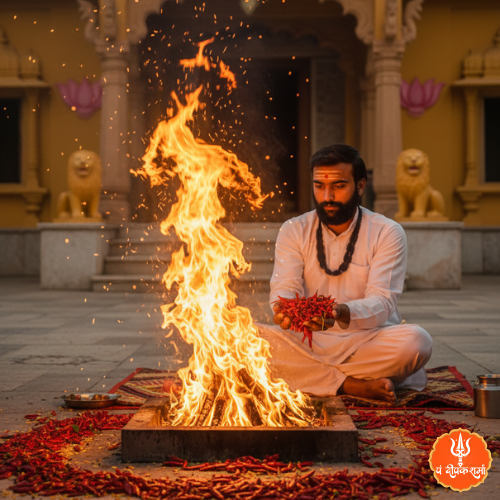
The Mirchi Hawan, a significant ritual dedicated to Devi Baglamukhi, is performed to invoke her blessings for protection and removal of enemies. The term ‘Mirchi’ refers to chili, which symbolizes the burning away of negativity and obstacles in one’s life. This hawan is not merely a ritual; it is a profound spiritual practice that aligns the devotee’s intentions with divine energies. Through the sacred fire, offerings are made to the deity, seeking her grace to overcome adversities and gain strength against adversaries.
In the context of the Mirchi Hawan, the chili represents the fiery nature of Devi Baglamukhi, who is known for her ability to silence enemies and protect her devotees. The act of offering mirchi into the sacred fire signifies the devotee’s desire to eliminate harmful influences and invoke the goddess’s protective aura. This ritual is especially beneficial for those facing legal battles, personal conflicts, or any form of opposition, as it channels divine energy to fortify the devotee’s resolve and shield them from negativity.
Thus, the Mirchi Hawan serves as a powerful tool for spiritual cleansing and empowerment, allowing devotees to connect deeply with Devi Baglamukhi’s divine presence. It is essential to perform this ritual with utmost devotion and adherence to Vedic principles to harness its full potential.
How This Ritual Helps
The Mirchi Hawan is a transformative ritual that aids in dispelling negativity and fostering a protective environment around the devotee. By invoking the blessings of Devi Baglamukhi, individuals can experience a significant shift in their circumstances. This hawan is particularly effective for those who feel overwhelmed by adversities, as it empowers them to confront challenges with renewed vigor and confidence.
One of the primary benefits of the Mirchi Hawan is its ability to neutralize hostile energies. The offerings made during the hawan, particularly the mirchi, act as a catalyst for burning away negative influences. This cleansing process not only protects the devotee from external threats but also purifies their inner self, enabling them to approach situations with clarity and strength. Many devotees have reported a sense of relief and empowerment following the completion of this ritual, as it aligns their energies with that of the goddess.
Moreover, the Mirchi Hawan fosters a sense of community and support among participants. When performed in a group setting, the collective energy amplifies the effectiveness of the ritual, creating a powerful atmosphere of devotion and faith. This communal aspect reinforces the belief that together, under the guidance of Devi Baglamukhi, devotees can overcome any obstacle that stands in their way.
Mythological Background
The roots of the Mirchi Hawan can be traced back to ancient Hindu scriptures that extol the virtues of Devi Baglamukhi. She is one of the ten Mahavidyas, a group of powerful goddesses who embody various aspects of divine feminine energy. Baglamukhi is revered as the goddess of speech, wisdom, and protection, and her devotees seek her blessings to gain victory over adversaries and obstacles.
According to mythology, Devi Baglamukhi once intervened in a fierce battle between the gods and demons. The demons, empowered by their arrogance, threatened the balance of the universe. In response, the goddess manifested her divine form, wielding immense power to silence their blasphemous words and restore harmony. This act of silencing is symbolic of her ability to protect her devotees from harm and ensure their victory over challenges.
The Mirchi Hawan, therefore, serves as a reminder of the goddess’s protective nature. By performing this ritual, devotees not only honor her legacy but also invoke her strength to confront their own battles. The use of mirchi in the hawan symbolizes the burning away of negativity, echoing the goddess’s triumph over malevolent forces. This rich mythological background adds depth to the ritual, making it a profound spiritual practice for those seeking guidance and protection.
Who Should Perform This
The Mirchi Hawan is particularly beneficial for individuals facing challenges related to enemies, legal disputes, or any form of opposition. It is recommended for those who feel overwhelmed by negative energies or are in need of divine intervention to navigate difficult situations. Anyone seeking to enhance their protective aura and gain clarity in their life can benefit from this powerful ritual.
Moreover, the hawan is suitable for individuals who are engaged in competitive environments, such as students preparing for exams or professionals facing workplace conflicts. By invoking the blessings of Devi Baglamukhi, participants can cultivate a sense of confidence and resilience, enabling them to confront their challenges head-on.
Additionally, families facing discord or conflict may also find solace in performing the Mirchi Hawan together. The collective energy of family members participating in the ritual fosters unity and strengthens bonds, while simultaneously invoking the goddess’s protection over the household. Thus, this hawan is not limited to individuals but can also be a communal effort to seek divine blessings for collective well-being.
Step-by-Step Vidhi (Very Detailed)
Performing the Mirchi Hawan requires careful adherence to Vedic rituals to ensure its effectiveness. Here is a detailed step-by-step guide:
Preparation
Begin by selecting an auspicious date and time for the hawan, preferably on a Tuesday or Saturday, as these days are considered favorable for invoking Devi Baglamukhi. Clean the space where the hawan will be conducted, ensuring it is free from any clutter or negativity. Set up a hawan kund (sacred fire pit) using clay or metal, and place it in a clean and quiet area.
Gather the necessary materials, including dried mirchi (chili), ghee (clarified butter), samagri (a mix of sacred offerings), and flowers. It is also important to have a picture or idol of Devi Baglamukhi present during the hawan to focus the energy of the ritual. Prepare the space by laying down a clean cloth and arranging the materials neatly around the hawan kund.
Invocation
Once the preparation is complete, begin the hawan by invoking the presence of Devi Baglamukhi. Light a diya (lamp) and offer prayers, expressing your intentions and desires for protection and victory over adversities. Chant the following mantra to invite the goddess’s energy:
ॐ ह्लीं बगलामुखि सर्व शत्रुस्तम्भनाय स्वाहा
As you chant, visualize the goddess enveloping you in her protective aura. This invocation is crucial as it establishes a connection with the divine, allowing the energies of the hawan to flow harmoniously.
Offering
Once the invocation is complete, begin making offerings into the hawan kund. Start by adding ghee into the fire, followed by the dried mirchi. As you offer each item, recite the mantra and focus on your intentions. The act of offering symbolizes your surrender to the goddess, allowing her to take control of the situation and guide you towards resolution.
Continue to offer samagri and flowers, maintaining a steady flow of prayers and mantras. It is essential to remain focused and devoted during this process, as the energy you put into the hawan will directly influence its effectiveness. Conclude the offering by expressing gratitude to Devi Baglamukhi for her blessings and protection.
Conclusion
After completing the offerings, allow the fire to burn down naturally. Once the hawan is finished, collect the remnants and dispose of them respectfully, preferably in a flowing river or a designated sacred area. This signifies the release of negativity and the acceptance of divine blessings. Finally, conclude the ritual by performing aarti (a ceremonial light offering) to Devi Baglamukhi, expressing your devotion and gratitude.
Mantra for This Ritual
The mantra associated with the Mirchi Hawan is:
ॐ ह्लीं बगलामुखि सर्व शत्रुस्तम्भनाय स्वाहा
**Transliteration:** Om Hleem Baglamukhi Sarva Shatrusambhanaya Swaha
This powerful mantra encapsulates the essence of the ritual, invoking the goddess’s energy to silence enemies and protect the devotee from harm. Each syllable resonates with divine vibrations, creating a protective shield around the practitioner. The mantra’s potency lies in its ability to channel the goddess’s strength, allowing devotees to confront their challenges with confidence.
When reciting this mantra, it is important to do so with sincerity and focus. Visualize the energy of Devi Baglamukhi enveloping you, providing strength and protection. The repetition of this mantra during the hawan amplifies its effects, creating a powerful connection with the divine. Devotees are encouraged to chant this mantra regularly, even outside of the hawan, to maintain a protective aura and invite the goddess’s blessings into their lives.
Do’s & Don’ts
To ensure the effectiveness of the Mirchi Hawan, it is essential to follow certain guidelines:
Do’s
- Perform the hawan with a pure heart and focused mind, free from distractions.
- Use fresh and high-quality materials for the offerings to honor the goddess.
- Maintain cleanliness in the space where the hawan is conducted.
- Invite family members or close friends to participate, as collective energy enhances the ritual.
- Express gratitude to Devi Baglamukhi after the hawan, acknowledging her blessings.
Don’ts
- Avoid performing the hawan in a cluttered or impure environment.
- Do not rush through the ritual; take your time to connect with the divine.
- Refrain from using stale or low-quality offerings, as they may diminish the ritual’s effectiveness.
- Do not engage in negative thoughts or actions during the hawan.
- Avoid discussing any conflicts or negative situations while performing the ritual.
When to Perform
The Mirchi Hawan can be performed at any time when one feels the need for protection or is facing adversities. However, certain auspicious days are particularly favorable for this ritual. Tuesdays and Saturdays are considered ideal, as they are associated with strength and overcoming obstacles. Additionally, performing the hawan during auspicious lunar phases, such as Purnima (full moon) or Amavasya (new moon), can enhance its effectiveness.
It is also recommended to perform the Mirchi Hawan during significant life events, such as before starting a new job, entering a legal battle, or facing personal conflicts. This proactive approach allows devotees to seek divine guidance and protection before embarking on challenging endeavors. Regularly performing the hawan, especially during times of stress or uncertainty, can help maintain a protective aura and foster a sense of security.
How Pandit Deepak Sharma can help
Pandit Deepak Sharma, an experienced Vedic practitioner, offers his expertise in conducting the Mirchi Hawan according to traditional Vedic principles. With over 25 years of experience, he understands the nuances of this sacred ritual and ensures that it is performed with utmost devotion and precision. His guidance allows devotees to connect deeply with Devi Baglamukhi, enhancing the effectiveness of the hawan.
By seeking the assistance of Pandit Deepak Sharma, devotees can rest assured that their rituals are conducted in alignment with authentic Vedic practices. He provides personalized guidance, helping individuals understand the significance of each step in the hawan. This spiritual support fosters a deeper connection with the divine, allowing participants to experience the full benefits of the Mirchi Hawan.
Moreover, Pandit Deepak Sharma’s presence during the hawan creates a sacred atmosphere, amplifying the collective energy of the participants. His calming demeanor and profound knowledge instill confidence in devotees, enabling them to approach their challenges with faith and determination. For those seeking to perform the Mirchi Hawan, consulting Pandit Deepak Sharma ensures a meaningful and transformative experience.
Nalkheda Temple Connection
The Nalkheda Temple, dedicated to Devi Baglamukhi, serves as a significant spiritual hub for devotees seeking divine intervention and guidance. Located in the Agar Malwa district of Madhya Pradesh, this temple is renowned for its rich history and profound spiritual energy. The temple attracts devotees from all over the country, who come to seek blessings and perform rituals under the guidance of experienced priests.
At the Nalkheda Temple, the Mirchi Hawan is performed with great reverence, drawing upon the sacred energies of the goddess. The temple’s ambiance enhances the ritual, allowing devotees to immerse themselves fully in the experience. The presence of the deity in the temple creates a powerful connection, amplifying the effects of the hawan and providing devotees with a sense of peace and protection.
Visiting the Nalkheda Temple for the Mirchi Hawan not only offers spiritual benefits but also fosters a sense of community among devotees. Engaging in collective rituals strengthens bonds and creates a supportive environment for individuals facing challenges. The temple serves as a sanctuary for those seeking solace and empowerment, making it an ideal location for performing the Mirchi Hawan.
FAQ
What is the significance of the Mirchi Hawan?
The Mirchi Hawan holds great significance in Hindu rituals, particularly for those seeking protection from adversaries. It is believed that by invoking the blessings of Devi Baglamukhi, devotees can dispel negativity and gain strength to confront challenges. The use of mirchi symbolizes the burning away of harmful influences, making this hawan a powerful tool for spiritual cleansing and empowerment.
Many devotees have experienced positive transformations in their lives after performing the Mirchi Hawan, reporting increased confidence and clarity in their decision-making. This ritual serves as a reminder of the goddess’s protective nature, allowing individuals to navigate their challenges with faith and resilience.
Can anyone perform the Mirchi Hawan?
Yes, the Mirchi Hawan can be performed by anyone seeking divine intervention and protection. It is particularly beneficial for individuals facing legal disputes, personal conflicts, or any form of opposition. Families can also participate in the hawan together, fostering unity and invoking the goddess’s blessings over their household.
While anyone can perform the hawan, it is advisable to seek guidance from an experienced priest, such as Pandit Deepak Sharma, to ensure that the ritual is conducted according to Vedic principles. This guidance enhances the effectiveness of the hawan and deepens the connection with Devi Baglamukhi.
How often should the Mirchi Hawan be performed?
The frequency of performing the Mirchi Hawan depends on individual circumstances. It can be performed whenever one feels the need for protection or is facing adversities. However, it is particularly beneficial to conduct the hawan during auspicious days, such as Tuesdays and Saturdays, or during significant life events.
Regularly performing the hawan, especially during times of stress or uncertainty, can help maintain a protective aura and foster a sense of security. Devotees are encouraged to make the Mirchi Hawan a part of their spiritual practice, allowing them to connect with Devi Baglamukhi and seek her blessings consistently.
What materials are needed for the Mirchi Hawan?
To perform the Mirchi Hawan, certain materials are essential. These include dried mirchi (chili), ghee (clarified butter), samagri (a mix of sacred offerings), flowers, and a picture or idol of Devi Baglamukhi. It is important to use fresh and high-quality materials to honor the goddess and enhance the effectiveness of the ritual.
Additionally, a hawan kund (sacred fire pit) is required to conduct the hawan. Ensuring that all materials are prepared in advance allows for a smooth and focused ritual, enabling devotees to connect deeply with the divine.
What should I do after the Mirchi Hawan?
After completing the Mirchi Hawan, it is important to allow the fire to burn down naturally. Collect the remnants and dispose of them respectfully, preferably in a flowing river or a designated sacred area. This signifies the release of negativity and the acceptance of divine blessings.
Conclude the ritual by performing aarti (a ceremonial light offering) to Devi Baglamukhi, expressing your devotion and gratitude. It is also recommended to maintain a positive mindset and continue chanting the associated mantra regularly to sustain the protective energy invoked during the hawan.
Recommended Reading / Further Exploration
- Baglamukhi Rituals Nalkheda for Small Businesses: Practical Implementation
- Common Mistakes in Baglamukhi Puja Nalkheda and How to Fix Them
- Common Mistakes in Baglamukhi Hawan Nalkheda and How to Fix Them
- Baglamukhi Hawan: Everything You Need to Know
- Complete Guide to Baglamukhi Anushthan Online Booking