Meaning of This Ritual
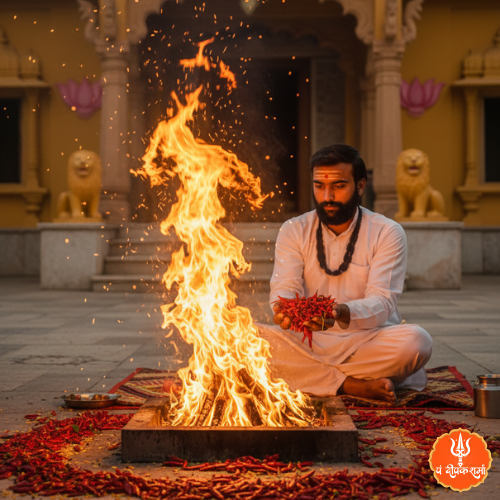
Chaitra Navratri is a sacred time dedicated to the worship of the divine feminine energy, where devotees seek blessings for strength, wisdom, and protection. The Chaitra navratri havan, particularly focused on baglamukhi Mata, is a profound ritual that symbolizes the removal of obstacles and the attainment of victory over adversities. This ritual is performed with utmost devotion and precision, aligning with the Vedic traditions that have been passed down through generations. It is believed that through this Havan, devotees can invoke the blessings of Baglamukhi Mata, who is revered for her power to silence enemies and grant success in challenging situations.
The essence of this ritual lies in its ability to purify the environment and the devotee’s mind, creating a sacred space for divine energy to flow. The Havan involves the offering of specific materials into the sacred fire, accompanied by mantras that resonate with the energies of Baglamukhi Mata. This process not only helps in spiritual upliftment but also serves as a means to manifest one’s desires and intentions into reality.
As devotees gather to perform the Chaitra Navratri Havan, they collectively channel their energies towards a common goal, fostering a sense of community and shared devotion. The ritual is not merely a personal endeavor but a collective invocation of divine blessings, making it a powerful spiritual experience.
How This Ritual Helps
The Chaitra Navratri Havan dedicated to Baglamukhi Mata serves multiple purposes for devotees. Primarily, it is aimed at overcoming obstacles and adversities in life. Many individuals face challenges in various aspects, be it personal, professional, or spiritual. The blessings of Baglamukhi Mata, through this Havan, are believed to provide the necessary strength and guidance to navigate through these challenges effectively.
Additionally, this ritual is particularly beneficial for those involved in legal matters or facing conflicts. The mantra associated with Baglamukhi Mata is known for its potency in ensuring victory in court cases and legal disputes. Devotees often report a sense of relief and clarity after performing the Havan, as it helps in aligning their energies with the divine will, thus facilitating favorable outcomes.
Moreover, the Chaitra Navratri Havan is also a time for spiritual rejuvenation. It allows devotees to connect deeply with their spiritual selves, fostering a sense of peace and tranquility. The act of performing the Havan, with its intricate rituals and offerings, encourages mindfulness and devotion, leading to a more profound spiritual awakening.
Mythological Background
The significance of Baglamukhi Mata in Hindu mythology is profound. She is one of the ten Mahavidyas, representing the power of knowledge and the ability to control speech and communication. According to ancient texts, Baglamukhi Mata is known to have subdued the demons of ignorance and falsehood, thus establishing truth and righteousness in the world. Her divine form is often depicted as a goddess who holds a tongue in her hand, symbolizing her power to silence adversaries and grant victory to her devotees.
The stories of Baglamukhi Mata’s victories over evil forces are numerous, each illustrating her unwavering strength and compassion towards her devotees. One notable legend recounts how she helped a devotee who was wrongfully accused in a court case. By invoking her blessings through a Havan, the devotee was able to turn the tides in their favor, showcasing the goddess’s ability to influence justice and fairness.
Furthermore, the Chaitra Navratri period is particularly auspicious for worshipping Baglamukhi Mata. It is believed that during this time, the energies of the goddess are heightened, making it an ideal moment for devotees to seek her blessings. The rituals performed during this period are steeped in tradition, ensuring that the essence of the worship remains intact and powerful.
Who Should Perform This
The Chaitra Navratri Havan is suitable for anyone seeking the blessings of Baglamukhi Mata, particularly those facing challenges in their lives. Individuals involved in legal disputes, career obstacles, or personal conflicts can greatly benefit from this ritual. It is also recommended for those who wish to enhance their spiritual practice and deepen their connection with the divine.
Moreover, families seeking harmony and protection from negative influences are encouraged to participate in the Havan. The collective energy generated during the ritual can foster unity and strength, helping to dispel any discord or misunderstandings within the household.
Lastly, individuals who are on a spiritual journey, looking to gain clarity and wisdom, will find this ritual immensely beneficial. By invoking the blessings of Baglamukhi Mata, they can receive guidance and support in their endeavors, paving the way for personal growth and enlightenment.
Step-by-Step Vidhi (Very Detailed)
The Vidhi for performing the Chaitra Navratri Havan is a sacred process that requires devotion and adherence to Vedic traditions. Below is a detailed step-by-step guide:
Preparation
Begin by selecting an auspicious date during Chaitra Navratri, preferably on the first day of the festival. Clean the space where the Havan will be performed, ensuring it is free from any impurities. Set up a Havan Kund (sacred fire pit) at the center of the space, surrounded by flowers and sacred items.
Gather all necessary materials for the Havan, including ghee (clarified butter), samagri (a mixture of sacred offerings), and specific herbs that resonate with Baglamukhi Mata. It is essential to have a clean cloth and a bell to ring during the ritual.
Invocation
Once the space is prepared, the priest or the head of the family should invoke the presence of Baglamukhi Mata. This can be done by chanting her mantras and lighting the sacred fire in the Havan Kund. The fire symbolizes the divine energy that will carry the offerings to the goddess.
As the fire ignites, offer ghee and samagri into the flames while chanting the appropriate mantras. This act of offering is a way to express gratitude and seek blessings from the goddess. It is crucial to maintain focus and devotion during this process, as it enhances the effectiveness of the ritual.
Offerings and Prayers
After the initial offerings, continue to add samagri and ghee into the fire while reciting the specific mantras dedicated to Baglamukhi Mata. Each offering should be accompanied by a prayer, expressing your intentions and desires. This is a time for personal reflection and connection with the divine.
Once the offerings are complete, conclude the Havan by performing aarti (a ritual of worship with light) and seeking blessings from Baglamukhi Mata. This final act solidifies the connection established during the ritual and ensures that the divine energy is absorbed by the devotees.
Mantra for This Ritual
The mantra associated with the Chaitra Navratri Havan for Baglamukhi Mata is:
ॐ ह्लीं बगलामुखि सर्वविघ्न नाशाय ह्लीं
Transliteration: Om Hleem Baglamukhi Sarvavighna Nashaya Hleem
Meaning: This powerful mantra is a call to Baglamukhi Mata to remove all obstacles and challenges from the devotee’s path. The syllable ‘Hleem’ is a seed sound that resonates with the energies of the goddess, while ‘Sarvavighna Nashaya’ translates to the removal of all difficulties. By chanting this mantra with devotion, devotees can invoke the protective and guiding energies of Baglamukhi Mata, ensuring that they are shielded from negativity and empowered to achieve their goals.
Chanting this mantra during the Havan amplifies its effects, as the vibrations created during the ritual enhance the connection with the divine. It is recommended to chant this mantra a specific number of times, ideally 108, to maximize its potency. Devotees should focus on their intentions while chanting, allowing the energy of the mantra to manifest their desires.
Do’s & Don’ts
When performing the Chaitra Navratri Havan, there are specific do’s and don’ts that devotees should adhere to for a successful and meaningful ritual.
Do’s
- Ensure that the space is clean and free from any distractions.
- Gather all necessary materials before starting the ritual.
- Maintain a calm and focused mindset throughout the Havan.
- Chant the mantras with devotion and sincerity.
- Offer your intentions and desires sincerely during the ritual.
Don’ts
- Avoid any negative thoughts or distractions during the Havan.
- Do not interrupt the ritual once it has begun.
- Refrain from using impure or non-sacred materials in the offerings.
- Do not rush through the ritual; take your time to connect with the divine.
- Avoid discussing worldly matters during the Havan.
When to Perform
The Chaitra Navratri Havan is ideally performed during the nine days of Chaitra Navratri, which typically falls in March or April. Each day holds special significance, and devotees can choose to perform the Havan on any of these days, with the first and last days being particularly auspicious.
It is also recommended to perform the Havan on specific days that align with the lunar calendar, enhancing its effectiveness. For those facing immediate challenges, conducting the Havan on a Saturday or during a full moon can amplify the blessings received from Baglamukhi Mata.
Ultimately, the best time to perform the Havan is when the devotee feels a strong calling to seek the blessings of Baglamukhi Mata. The sincerity of intention is what truly matters in this sacred ritual.
How Pandit Deepak Sharma can help
Pandit Deepak Sharma is an experienced Vedic practitioner specializing in Baglamukhi rituals and havans. With over 25 years of experience, he offers authentic guidance and support to devotees seeking to perform the Chaitra Navratri Havan. His deep understanding of Vedic traditions ensures that each ritual is conducted with precision and devotion, aligning with the sacred texts.
By consulting with Pandit Deepak Sharma, devotees can receive personalized advice on the best practices for their specific needs. He can guide them through the process, ensuring that the Havan is performed correctly and effectively. His presence during the ritual enhances the spiritual atmosphere, allowing devotees to connect more deeply with Baglamukhi Mata.
Furthermore, Pandit Deepak Sharma’s commitment to preserving the authenticity of Vedic rituals ensures that devotees receive the full benefits of their worship. His compassionate approach and dedication to serving the community make him a trusted guide for all spiritual endeavors.
Nalkheda Temple Connection
The Nalkheda Temple, dedicated to Baglamukhi Mata, is a significant pilgrimage site for devotees. Located in Agar Malwa district, Madhya Pradesh, this temple is known for its serene environment and powerful spiritual energy. The temple attracts numerous devotees during Chaitra Navratri, as many seek to perform the Havan and other rituals in the presence of the goddess.
Visiting the Nalkheda Temple during Chaitra Navratri enhances the experience of the Havan, as devotees can immerse themselves in the divine atmosphere. The temple’s sanctity and the collective energy of fellow devotees create a powerful environment for worship. Many devotees report profound experiences and blessings received during their visits to the temple.
For those unable to visit the temple, performing the Havan at home with the guidance of Pandit Deepak Sharma ensures that the essence of the ritual is preserved. The connection to the Nalkheda Temple remains strong, as the rituals performed resonate with the energies of Baglamukhi Mata, regardless of the physical location.