Meaning of This Ritual
The Chaitra navratri havan is a sacred ritual dedicated to Devi baglamukhi, one of the ten Mahavidyas, who embodies knowledge, power, and wisdom. This period is considered highly auspicious for spiritual practices, especially for invoking the blessings of the Divine Mother. The havan, or fire ritual, serves as a medium to connect with the divine energies, purifying the surroundings and the devotee’s mind. It is believed that performing the Chaitra Navratri Havan with devotion can lead to the removal of obstacles and the attainment of success in various aspects of life.
During this nine-night festival, devotees engage in various forms of worship, including chanting mantras, performing pujas, and conducting havans. Each day is dedicated to a different form of the Goddess, culminating in a powerful spiritual experience that rejuvenates the soul. The havan is not just a ritual; it is a profound expression of devotion, where offerings are made to the sacred fire, symbolizing the surrender of one’s ego and desires to the Divine.
In essence, the Chaitra Navratri Havan is a celebration of the divine feminine energy, a time to seek blessings for prosperity, health, and spiritual growth. It is an opportunity for devotees to cleanse their hearts and minds, aligning themselves with the higher vibrations of the universe.
How This Ritual Helps
The Chaitra Navratri Havan is known to bring numerous benefits to those who participate in it sincerely. Firstly, it is believed to purify the environment and the participants, creating a sacred space that fosters positivity and spiritual growth. The fire in the havan represents the divine light that dispels darkness and ignorance, allowing devotees to connect with their higher selves and the divine presence of Baglamukhi Mata.
Moreover, this ritual is particularly effective for removing obstacles in one’s life. Whether facing challenges in personal relationships, career, or health, the blessings of Baglamukhi Mata can provide the strength and clarity needed to overcome these hurdles. The havan acts as a catalyst for change, helping devotees to manifest their desires and intentions through focused prayers and offerings.
Additionally, the Chaitra Navratri Havan is a powerful tool for spiritual awakening. It encourages devotees to reflect on their lives, fostering a deeper understanding of their purpose and path. By engaging in this ritual, individuals can cultivate a sense of inner peace and harmony, which is essential for personal and spiritual development.
Mythological Background
The significance of the Chaitra Navratri Havan is deeply rooted in Hindu mythology. Devi Baglamukhi is revered as the goddess of speech, knowledge, and power. According to ancient texts, she is known to have subdued the demons of ignorance and negativity, empowering her devotees to speak their truth and overcome adversities. This aspect of the goddess is particularly relevant during Navratri, a time when devotees seek her blessings for strength and wisdom.
One of the most famous legends associated with Baglamukhi is her battle against the demon Madan. It is said that Madan, who represented ignorance and chaos, was defeated by the goddess through her divine powers. This victory symbolizes the triumph of knowledge over ignorance, making the Chaitra Navratri Havan an ideal time to invoke her blessings for clarity and guidance.
Furthermore, the nine nights of Navratri correspond to the nine forms of the goddess, each embodying different virtues and powers. By performing the havan during this sacred period, devotees honor the divine feminine energy and seek blessings for various aspects of their lives, including health, wealth, and spiritual enlightenment.
Who Should Perform This
The Chaitra Navratri Havan is open to all devotees seeking the blessings of Baglamukhi Mata. It is particularly beneficial for those who are facing challenges in their lives, whether they be related to career, relationships, or personal growth. Individuals who wish to enhance their spiritual practice or seek clarity in their life decisions can also greatly benefit from this ritual.
This havan is especially recommended for students preparing for competitive exams, professionals seeking career advancement, and anyone involved in legal matters. The blessings of Baglamukhi Mata can provide the necessary support and guidance to navigate these challenges successfully.
Moreover, those who have a strong inclination towards spiritual practices and wish to deepen their connection with the divine are encouraged to participate in the Chaitra Navratri Havan. It is a time for self-reflection, devotion, and seeking the grace of the goddess to manifest one’s highest potential.
Step-by-Step Vidhi (Very Detailed)
To perform the Chaitra Navratri Havan, one must follow a detailed Vedic procedure that ensures the ritual is conducted with utmost devotion and respect. The following steps outline the traditional vidhi:
Preparation
Before the havan, it is essential to prepare the space. Clean the area where the havan will take place, ensuring it is free from any distractions. Set up a sacred altar with images or idols of Devi Baglamukhi, along with necessary items such as ghee, samagri (havan materials), and a havan kund (fire pit). It is advisable to wear clean and traditional attire to maintain the sanctity of the ritual.
Invoking the Deity
Begin the ritual by invoking the presence of Devi Baglamukhi. Light a diya (lamp) and offer flowers to the goddess while chanting her sacred names. This step is crucial as it establishes a connection between the devotee and the divine. Offerings of fruits and sweets can also be made to please the goddess and invite her blessings into the space.
Performing the Havan
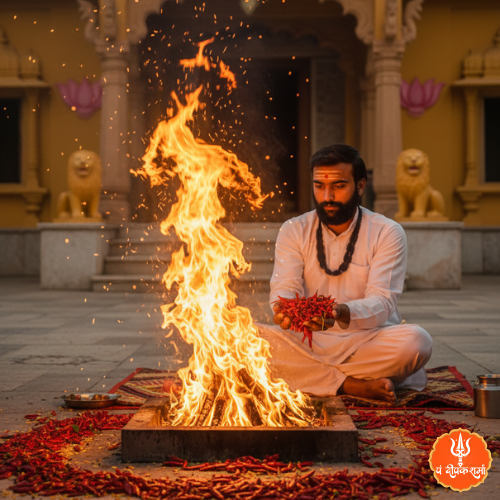
Once the deity is invoked, light the fire in the havan kund using dry wood and ghee. As the flames rise, begin the havan by offering samagri into the fire while chanting the prescribed mantras. The mantras should be recited with devotion, focusing on the intention behind the ritual. It is important to maintain a calm and focused mind during this process, allowing the energy of the havan to manifest.
Concluding the Ritual
After completing the offerings, conclude the havan by performing aarti (waving of light) in front of the goddess. Offer your gratitude for the blessings received and seek her continued guidance. Finally, distribute prasad (blessed food) among the participants, reinforcing the sense of community and shared devotion.
Mantra for This Ritual
The mantra associated with the Chaitra Navratri Havan is:
ॐ ह्लीं बगलामुखि सर्वविघ्न नाशाय ह्लीं
Transliteration: Om Hleem Baglamukhi Sarvavighna Nashaya Hleem
This powerful mantra is dedicated to Devi Baglamukhi and is believed to remove all obstacles and difficulties from the devotee’s path. The syllable ‘Hleem’ is a bija mantra, representing the essence of the goddess’s energy. Chanting this mantra with sincerity and devotion can invoke her blessings, leading to the resolution of challenges and the attainment of success.
The repetition of this mantra during the havan creates a vibrational frequency that aligns the devotee with the divine energies of Baglamukhi Mata. It is essential to focus on the meaning of the mantra while chanting, allowing its power to resonate within and around you. This practice not only aids in overcoming obstacles but also enhances one’s spiritual awareness and connection to the divine.
Do’s & Don’ts
When performing the Chaitra Navratri Havan, there are certain do’s and don’ts that should be observed to ensure the ritual is conducted properly:
Do’s
- Perform the havan with a pure heart and sincere intentions.
- Use fresh and pure materials for the havan, including ghee and samagri.
- Maintain a calm and focused atmosphere during the ritual.
- Offer prayers and gratitude to Devi Baglamukhi before and after the havan.
- Invite family and friends to participate, fostering a sense of community.
Don’ts
- Avoid using stale or impure materials for the havan.
- Do not engage in any distractions or negative thoughts during the ritual.
- Refrain from consuming non-vegetarian food or alcohol before the havan.
- Do not rush through the ritual; take your time to connect with the divine.
- Avoid any form of disrespect towards the goddess or the ritual.
When to Perform
The Chaitra Navratri Havan is ideally performed during the nine nights of Chaitra Navratri, which usually falls in March or April. This period is considered highly auspicious for worshipping Devi Baglamukhi, as it aligns with her divine energies. Each day of Navratri is dedicated to a different form of the goddess, allowing devotees to connect with her various aspects.
While the havan can be performed at any time during Navratri, it is particularly powerful when conducted on the first and last days of the festival. The first day marks the beginning of the divine energies, while the last day symbolizes the culmination of the worship and the receipt of blessings. Devotees are encouraged to choose a time that resonates with their personal spiritual journey and intentions.
Additionally, the Chaitra Navratri Havan can also be performed on specific days that hold personal significance for the devotee, such as birthdays, anniversaries, or during times of personal challenges. The key is to approach the ritual with sincerity and devotion, allowing the divine energies to flow freely.
How Pandit Deepak Sharma can help
Pandit Deepak Sharma, a revered Vedic practitioner, offers his expertise in conducting the Chaitra Navratri Havan at the Nalkheda Baglamukhi Temple. With over 25 years of experience, he ensures that the rituals are performed according to authentic Vedic traditions, allowing devotees to receive the full benefits of the havan. His deep understanding of the scriptures and devotion to Baglamukhi Mata make him an ideal guide for those seeking spiritual growth and blessings.
By consulting with Pandit Deepak Sharma, devotees can gain personalized insights into their spiritual journeys. He provides guidance on the appropriate timings, materials, and intentions for the havan, ensuring that each ritual is tailored to the individual’s needs. His compassionate approach fosters a nurturing environment, allowing devotees to feel supported in their spiritual endeavors.
Furthermore, Pandit Deepak Sharma’s connection to the Nalkheda Temple enhances the sanctity of the rituals performed. The temple is a sacred space where the divine energies of Baglamukhi are palpable, making the havan even more impactful. Devotees can experience a profound transformation through the rituals conducted by him, leading to a deeper connection with the divine.
Nalkheda Temple Connection
The Nalkheda Baglamukhi Temple is a significant pilgrimage site for devotees of Devi Baglamukhi. Located in Agar Malwa district, Madhya Pradesh, this temple is renowned for its spiritual ambiance and the powerful presence of the goddess. The temple attracts numerous devotees during the Chaitra Navratri, who come to seek blessings and participate in various rituals, including the havan.
The temple’s architecture and serene surroundings create an ideal environment for spiritual practices. Devotees often report experiencing a deep sense of peace and connection with the divine while at the temple. The rituals performed here, especially the Chaitra Navratri Havan, are believed to be particularly potent, as they are conducted in alignment with the temple’s sacred energies.
Visiting the Nalkheda Temple during Chaitra Navratri allows devotees to immerse themselves in the divine atmosphere and partake in the collective energy of worship. It is a time for reflection, devotion, and seeking the blessings of Baglamukhi Mata, making it an essential pilgrimage for those on a spiritual path.