Meaning of This Ritual
Chaitra Navratri is a sacred time when devotees honor the divine feminine energy, particularly through the worship of Goddess Durga in her various forms. Among these forms, baglamukhi Mata, known for her power to remove obstacles and grant victory over adversaries, holds a special place in the hearts of her devotees. The Chaitra Navratri Havan dedicated to Baglamukhi is a profound ritual that aims to invoke her blessings for protection, wisdom, and success in various endeavors. This ritual is not merely a ceremonial act; it is a heartfelt invocation of the divine, seeking her grace to overcome challenges and achieve desired goals.
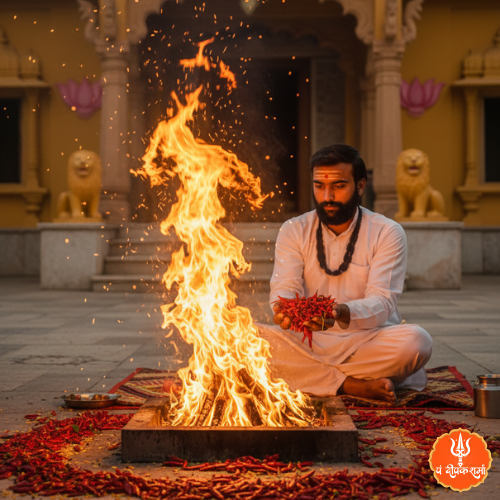
The havan, or fire ritual, is a Vedic practice that symbolizes the purification of the mind, body, and soul. Fire is considered a sacred element in Hinduism, representing the divine presence. During the Chaitra Navratri Havan, offerings are made into the sacred fire, accompanied by mantras that resonate with the energies of Baglamukhi Mata. This ritual serves as a medium to connect with the divine, allowing devotees to express their devotion and seek guidance in their lives.
In essence, the Chaitra Navratri Havan is a powerful spiritual practice that aligns the devotee’s intentions with the divine will of Baglamukhi Mata. It is a time for introspection, renewal, and the reaffirmation of faith, making it an essential part of the Navratri celebrations.
How This Ritual Helps
The Chaitra Navratri Havan dedicated to Baglamukhi Mata is believed to provide numerous spiritual and practical benefits to the devotees. One of the primary purposes of this ritual is to seek protection from negative influences and adversaries. Baglamukhi Mata is revered for her ability to silence enemies and remove obstacles that hinder progress. By performing this havan, devotees can invoke her blessings to shield themselves from harm and ensure a smooth path in their personal and professional lives.
Moreover, this ritual is a means of seeking wisdom and clarity. In times of confusion or uncertainty, the blessings of Baglamukhi Mata can guide devotees towards making the right decisions. The havan serves as a reminder to align one’s thoughts and actions with dharma, fostering a sense of righteousness and moral integrity. This alignment can lead to success in various endeavors, whether they be related to career, education, or personal relationships.
Additionally, the Chaitra Navratri Havan is a powerful tool for spiritual growth. The act of performing the havan, along with the chanting of mantras, elevates the devotee’s consciousness and fosters a deeper connection with the divine. This connection can lead to a transformative experience, enhancing one’s spiritual journey and bringing about inner peace and fulfillment.
Mythological Background
The worship of Baglamukhi Mata is steeped in rich mythology and tradition. She is one of the ten Mahavidyas, a group of powerful goddesses in Hinduism, each representing different aspects of the divine feminine. Baglamukhi is often depicted as a fierce goddess, wielding a club and holding the tongue of a demon, symbolizing her power to control speech and silence negativity. This imagery reflects her role as a protector and a source of strength for her devotees.
According to Hindu mythology, Baglamukhi Mata is believed to have emerged from the collective energy of the goddesses during a cosmic battle against evil forces. Her divine intervention was crucial in restoring balance and harmony in the universe. This narrative underscores her significance as a goddess who empowers her devotees to overcome challenges and emerge victorious in their struggles.
The Chaitra Navratri festival, dedicated to the worship of the divine feminine, is an auspicious time to perform rituals in honor of Baglamukhi Mata. The havan during this period is particularly powerful, as it coincides with the energies of renewal and rejuvenation associated with spring. Devotees believe that performing the Chaitra Navratri Havan can amplify their intentions and enhance the effectiveness of their prayers.
Who Should Perform This
The Chaitra Navratri Havan is suitable for anyone seeking the blessings of Baglamukhi Mata, particularly those facing challenges in their lives. Individuals dealing with legal issues, conflicts, or adversaries can greatly benefit from this ritual. The havan serves as a means to invoke the goddess’s protective energies, providing strength and courage to confront and overcome obstacles.
Moreover, this ritual is also beneficial for those seeking clarity and guidance in their personal or professional lives. Students preparing for exams, individuals pursuing career advancements, or anyone at a crossroads can find solace and direction through the blessings of Baglamukhi Mata. The havan acts as a spiritual catalyst, helping devotees align their intentions with their higher purpose.
Additionally, the Chaitra Navratri Havan can be performed by families seeking harmony and prosperity. By inviting the divine presence of Baglamukhi Mata into their homes, families can foster an environment of peace and mutual support, enhancing their collective well-being.
Step-by-Step Vidhi (Very Detailed)
Performing the Chaitra Navratri Havan requires adherence to specific Vedic rituals to ensure its efficacy. Here is a detailed step-by-step guide:
Preparation
Before commencing the havan, it is essential to prepare the space. Choose a clean and sacred area, preferably in the home or temple, where the havan can be conducted without disturbances. Gather all necessary materials, including a havan kund (fire pit), ghee, wood, and offerings such as grains, flowers, and fruits. It is advisable to take a bath and wear clean, traditional attire to invoke a sense of purity and devotion.
Invoking the Deity
Begin the ritual by invoking the presence of Baglamukhi Mata. Light a diya (lamp) and offer flowers while reciting her sacred mantra. This step is crucial as it establishes a connection with the goddess, inviting her energies into the space. The mantra for this ritual is:
ॐ ह्लीं बगलामुखि सर्वविघ्न नाशाय ह्लीं
Transliteration: Om Hleem Baglamukhi Sarvavighna Nashaya Hleem
Meaning: This mantra is a powerful invocation for the removal of all obstacles and challenges. Chanting it with devotion opens the channels for divine blessings.
Performing the Havan
Once the deity is invoked, proceed to perform the havan. Place the wood in the havan kund and light it using ghee. As the fire ignites, offer the prepared materials into the flames while chanting the mantras dedicated to Baglamukhi Mata. Each offering symbolizes the surrender of obstacles and negative energies to the divine fire. It is important to maintain focus and devotion during this process, allowing the energies of the havan to manifest.
Concluding the Ritual
After completing the offerings, conclude the havan by thanking Baglamukhi Mata for her blessings. Offer prasad (blessed food) to the participants and distribute it among family and friends. This sharing of prasad symbolizes the abundance and grace received from the goddess. Finally, express gratitude for the opportunity to perform the ritual and seek her continued guidance in daily life.
Mantra for This Ritual
The mantra used during the Chaitra Navratri Havan is:
ॐ ह्लीं बगलामुखि सर्वविघ्न नाशाय ह्लीं
Transliteration: Om Hleem Baglamukhi Sarvavighna Nashaya Hleem
This mantra holds profound significance in the context of the havan. The syllable ‘ॐ’ represents the universal sound, the essence of the divine. ‘ह्लीं’ is a bija (seed) mantra associated with Baglamukhi, embodying her energies of power and protection. The phrase ‘सर्वविघ्न नाशाय’ translates to ‘for the removal of all obstacles,’ emphasizing the purpose of the ritual.
Chanting this mantra with sincerity and devotion during the havan enhances the connection with Baglamukhi Mata, allowing her blessings to flow into the lives of the devotees. It serves as a reminder of the power of faith and intention, reinforcing the belief that with divine support, any challenge can be overcome.
Do’s & Don’ts
To ensure the effectiveness of the Chaitra Navratri Havan, it is essential to follow certain do’s and don’ts:
Do’s
- Perform the havan with a pure heart and sincere intentions.
- Use fresh and natural offerings, such as flowers, fruits, and grains.
- Maintain a clean and sacred space for the ritual.
- Invite family members to participate, fostering a collective energy of devotion.
- Recite the mantra with focus and devotion, allowing its vibrations to resonate.
Don’ts
- Avoid using artificial or processed materials for offerings.
- Do not engage in negative thoughts or distractions during the ritual.
- Refrain from consuming non-vegetarian food or alcohol on the day of the havan.
- Do not rush through the ritual; take your time to connect with the divine.
- Avoid performing the havan in a cluttered or impure environment.
When to Perform
The Chaitra Navratri Havan is ideally performed during the nine nights of Navratri, which usually falls in the months of March or April. In 2026, Chaitra Navratri will be observed from March 21 to March 29. Each day of Navratri is dedicated to a different form of the goddess, making it a highly auspicious time for spiritual practices.
It is particularly beneficial to perform the havan on the first day of Navratri, known as Pratipada, as it sets the tone for the entire festival. However, devotees can also choose to perform the havan on any of the nine days, aligning their intentions with the specific energies of each day. The full moon day following Navratri, known as Purnima, is also considered a favorable time for concluding the rituals and seeking the goddess’s blessings.
Ultimately, the timing of the havan should resonate with the devotee’s personal circumstances and spiritual goals. Consulting with a knowledgeable pandit can provide further guidance on the most auspicious timing for the ritual.
How Pandit Deepak Sharma can help
Pandit Deepak Sharma, a revered Vedic practitioner, specializes in performing authentic Baglamukhi rituals, including the Chaitra Navratri Havan. With over 25 years of experience, he brings a deep understanding of the Vedic traditions and the significance of each ritual. His guidance ensures that the havan is conducted with the utmost devotion and adherence to the Vedic principles.
By consulting with Pandit Deepak Sharma, devotees can receive personalized advice on the rituals best suited to their needs. He can assist in preparing for the havan, providing insights into the appropriate offerings, mantras, and timings. His presence during the ritual enhances the spiritual atmosphere, allowing devotees to connect more profoundly with Baglamukhi Mata.
Furthermore, Pandit Deepak Sharma’s expertise extends beyond the havan itself. He offers spiritual counseling and remedies for various life challenges, helping devotees navigate their journeys with faith and confidence. His commitment to serving the community and promoting authentic Vedic practices makes him a trusted guide for those seeking the blessings of Baglamukhi Mata.
Nalkheda Temple Connection
The Nalkheda Temple, dedicated to Baglamukhi Mata, is a significant pilgrimage site for devotees seeking her blessings. Located in Agar Malwa district, Madhya Pradesh, this temple is renowned for its spiritual ambiance and the divine presence of the goddess. The temple attracts thousands of devotees during Chaitra Navratri, who come to perform rituals and seek the goddess’s grace.
Performing the Chaitra Navratri Havan at the Nalkheda Temple amplifies the spiritual experience, as the energies of the temple enhance the effectiveness of the rituals. Devotees believe that being in the presence of the goddess during this auspicious time can lead to profound transformations in their lives. The temple’s serene environment, combined with the collective devotion of fellow devotees, creates a powerful atmosphere for spiritual growth.
For those unable to visit the temple, Pandit Deepak Sharma offers the option of performing the havan on behalf of devotees, ensuring that the rituals are conducted with the same reverence and authenticity as if they were performed in the temple itself. This connection to the Nalkheda Temple allows devotees to experience the blessings of Baglamukhi Mata, regardless of their physical location.
FAQ
What is the significance of Chaitra Navratri Havan?
The Chaitra Navratri Havan holds immense significance as it is a time dedicated to the worship of the divine feminine. This ritual specifically honors Baglamukhi Mata, who is revered for her ability to remove obstacles and grant victory over adversaries. Performing the havan during this auspicious period allows devotees to align their intentions with the energies of the goddess, seeking her blessings for protection, wisdom, and success.
Moreover, the havan serves as a means of purification, both physically and spiritually. The act of offering materials into the sacred fire symbolizes the surrender of negativity and obstacles to the divine. This purification process is essential for fostering a deeper connection with the goddess and enhancing the effectiveness of the prayers.
Can anyone perform the Chaitra Navratri Havan?
Yes, anyone can perform the Chaitra Navratri Havan, regardless of their background or experience. The ritual is open to all devotees seeking the blessings of Baglamukhi Mata. It is particularly beneficial for individuals facing challenges, such as legal issues or conflicts, as well as those seeking clarity and guidance in their lives.
While the havan can be performed individually, it is often more powerful when conducted in a group setting, allowing for collective energy and devotion. Families are encouraged to participate together, fostering a sense of unity and shared spiritual experience.
What materials are needed for the havan?
To perform the Chaitra Navratri Havan, certain materials are essential. These include a havan kund (fire pit), wood, ghee, and offerings such as grains, flowers, and fruits. It is important to use fresh and natural materials to honor the goddess properly. The offerings symbolize the devotee’s devotion and surrender, making them a vital part of the ritual.
Additionally, having a diya (lamp) and incense can enhance the spiritual atmosphere during the havan. These elements contribute to creating a sacred space, inviting the divine presence of Baglamukhi Mata into the ritual.
How can Pandit Deepak Sharma assist in the havan?
Pandit Deepak Sharma, with his extensive experience in Vedic rituals, can provide invaluable assistance in performing the Chaitra Navratri Havan. He offers personalized guidance on the appropriate materials, mantras, and timings for the ritual, ensuring that it is conducted with authenticity and devotion.
His presence during the havan enhances the spiritual ambiance, allowing devotees to connect more deeply with Baglamukhi Mata. Furthermore, Pandit Deepak Sharma can offer spiritual counseling and remedies for various life challenges, helping devotees navigate their journeys with faith and confidence.
When is the best time to perform the havan?
The best time to perform the Chaitra Navratri Havan is during the nine nights of Navratri, which typically falls in March or April. In 2026, Chaitra Navratri will be observed from March 21 to March 29. Each day of Navratri is dedicated to a different form of the goddess, making it an auspicious time for spiritual practices.
While the first day of Navratri is particularly significant for initiating the havan, devotees can choose to perform it on any of the nine days, aligning their intentions with the specific energies of each day. Consulting with a knowledgeable pandit can provide further guidance on the most auspicious timing for the ritual.