Meaning of This Ritual
Chaitra Navratri is a sacred time when devotees honor the divine feminine energy, particularly through the worship of Goddess Durga and her various forms. Among these forms, Devi baglamukhi holds a special place, representing wisdom, power, and the ability to overcome obstacles. The rituals performed during this period are not just acts of devotion but are also seen as a means to invoke the blessings of the goddess for personal and communal well-being.
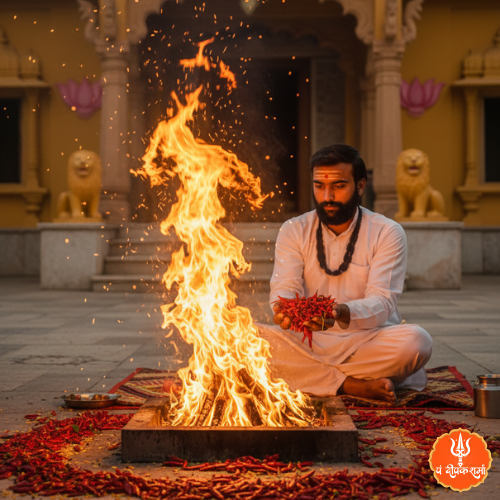
The Baglamukhi Havan during Chaitra Navratri is particularly significant as it symbolizes the removal of negativity and the establishment of peace and prosperity. This ritual is deeply rooted in the Vedic tradition, where fire is considered a purifying element. The havan is performed to invoke the goddess’s blessings, seeking her guidance and protection against adversities.
Through the chanting of mantras and the offering of sacred items into the fire, devotees express their reverence and devotion. The essence of this ritual lies in its ability to connect the devotee with the divine, fostering a sense of peace and spiritual upliftment.
How This Ritual Helps
The Chaitra Navratri Baglamukhi Havan serves multiple purposes for devotees. Primarily, it is a means to seek the goddess’s blessings for overcoming challenges, whether they be personal, professional, or spiritual. Many devotees turn to this ritual when facing legal issues, career obstacles, or conflicts with adversaries, believing that the goddess’s intervention can lead to resolution and success.
Additionally, the havan is believed to purify the environment and the mind. The act of offering to the sacred fire helps in cleansing negative energies that may surround an individual or a household. This purification process is essential for creating a conducive atmosphere for spiritual growth and personal development.
Moreover, participating in the Chaitra Navratri rituals fosters a sense of community among devotees. Coming together in worship strengthens bonds and creates a shared spiritual experience, enhancing the collective energy of devotion and faith.
Mythological Background
In Hindu mythology, Devi Baglamukhi is one of the ten Mahavidyas, embodying the power of speech and wisdom. Her name translates to ‘the one who can stop the speech of enemies,’ symbolizing her ability to protect her devotees from harm and negativity. The stories surrounding her worship emphasize her role as a protector and a guide, often depicted in texts as a fierce warrior who combats ignorance and injustice.
According to ancient scriptures, during the Chaitra month, the goddess is particularly active and responsive to the prayers of her devotees. It is believed that she descended to Earth during this time to bless her followers with strength and wisdom. The rituals performed during Chaitra Navratri are thus seen as a way to honor her divine presence and seek her guidance.
The significance of the havan is further highlighted in the tales of devotees who have experienced miraculous transformations in their lives through sincere worship. These narratives serve as a source of inspiration, encouraging others to engage in the rituals with faith and devotion.
Who Should Perform This
The Chaitra Navratri Baglamukhi Havan is suitable for anyone seeking spiritual upliftment, resolution of conflicts, or guidance in their personal and professional lives. Individuals facing legal challenges, career stagnation, or adversities from rivals are particularly encouraged to participate in this ritual. It is believed that the blessings of Devi Baglamukhi can help in overcoming such obstacles and achieving success.
Moreover, this ritual is beneficial for those looking to enhance their spiritual practice. Engaging in the havan allows devotees to deepen their connection with the divine, fostering a sense of peace and clarity in their lives. It is also a great opportunity for families to come together in worship, reinforcing their bonds and shared beliefs.
Even those who may not be facing immediate challenges can benefit from participating in the havan. The act of devotion itself is purifying and uplifting, providing a sense of community and spiritual growth.
Step-by-Step Vidhi (Very Detailed)
The Vidhi for the Chaitra Navratri Baglamukhi Havan is a sacred process that requires devotion and adherence to Vedic traditions. Here is a detailed step-by-step guide:
Preparation
Before the ritual begins, it is essential to prepare the space. Clean the area where the havan will take place, ensuring it is free from any distractions. Set up a havan kund (sacred fire pit) with the appropriate materials, including wood, ghee, and offerings. The atmosphere should be serene, with flowers and incense to enhance the spiritual ambiance.
Invocation of the Deity
Once the space is prepared, the ritual begins with the invocation of Devi Baglamukhi. This involves chanting specific mantras to invite her presence. The main mantra for this ritual is:
ॐ ह्लीं बगलामुखि सर्वविघ्न नाशाय ह्लीं
Transliteration: Om Hleem Baglamukhi Sarva Vighna Nashaya Hleem
This mantra is chanted with devotion, calling upon the goddess to remove all obstacles and grant blessings.
Offering to the Fire
As the chanting continues, offerings are made to the fire. These offerings typically include ghee, grains, and other sacred items. Each offering is accompanied by a specific mantra, reinforcing the intention behind the ritual. The act of offering symbolizes surrender and devotion, allowing the devotee to express their desires and seek the goddess’s blessings.
Concluding the Ritual
After the offerings, the havan concludes with a final prayer, thanking Devi Baglamukhi for her presence and blessings. It is customary to distribute prasad (blessed food) among participants, symbolizing the sharing of divine grace. The atmosphere should remain calm and reflective, allowing devotees to absorb the energy of the ritual.
Mantra for This Ritual
The primary mantra for the Chaitra Navratri Baglamukhi Havan is:
ॐ ह्लीं बगलामुखि सर्वविघ्न नाशाय ह्लीं
Transliteration: Om Hleem Baglamukhi Sarva Vighna Nashaya Hleem
This mantra is a powerful invocation of Devi Baglamukhi, specifically aimed at removing obstacles and granting success in endeavors. The syllable ‘Hleem’ is considered a seed mantra, embodying the essence of the goddess’s energy. Chanting this mantra with sincerity and devotion creates a connection with the divine, allowing devotees to seek guidance and support in their lives.
The significance of this mantra extends beyond mere words; it is a vibration that resonates with the energies of the universe. When chanted during the havan, it amplifies the intentions of the devotee, creating a powerful spiritual atmosphere. Regular recitation of this mantra is believed to enhance one’s wisdom and protect against adversities.
Do’s & Don’ts
To ensure the effectiveness of the Chaitra Navratri Baglamukhi Havan, it is essential to follow certain guidelines:
Do’s
- Perform the ritual with a pure heart and sincere intentions.
- Maintain cleanliness in the space where the havan is conducted.
- Use fresh and pure materials for offerings.
- Invite family and friends to participate, fostering a sense of community.
- Recite the mantras with devotion and focus.
Don’ts
- Avoid distractions during the ritual; maintain a calm atmosphere.
- Do not use stale or impure items for offerings.
- Refrain from engaging in negative thoughts or actions during the havan.
- Do not rush through the rituals; take time to connect with the divine.
- Avoid discussing worldly matters during the ceremony.
When to Perform
The Chaitra Navratri is observed during the lunar month of Chaitra, typically falling in March or April. This period is considered highly auspicious for performing the Baglamukhi Havan. Devotees are encouraged to engage in this ritual on all nine days of Navratri, with particular emphasis on the final day, known as Ram Navami, which marks the birth of Lord Rama.
Each day of Navratri is dedicated to a different form of the goddess, and the energy during this time is believed to be particularly potent. Engaging in the havan during these days enhances the spiritual benefits and allows devotees to connect more deeply with Devi Baglamukhi.
For those unable to perform the ritual during the entire Navratri, it is still beneficial to conduct the havan on specific days that hold personal significance, such as birthdays, anniversaries, or during times of personal challenges.
How Pandit Deepak Sharma can help
Pandit Deepak Sharma, with his extensive experience in performing Baglamukhi rituals, offers invaluable guidance for devotees seeking to conduct the Chaitra Navratri Baglamukhi Havan. His deep understanding of Vedic traditions ensures that the rituals are performed with authenticity and devotion.
By seeking his assistance, devotees can ensure that their havan is conducted in accordance with traditional practices, maximizing the spiritual benefits. Pandit Deepak Sharma provides personalized guidance, helping individuals understand the significance of each step in the ritual and the appropriate offerings to make.
Moreover, his presence during the ritual enhances the spiritual atmosphere, allowing devotees to connect more profoundly with Devi Baglamukhi. His compassionate approach and dedication to serving the community make him a trusted spiritual guide for all who seek divine blessings.
Nalkheda Temple Connection
The Nalkheda Temple, dedicated to Devi Baglamukhi, is a revered pilgrimage site for devotees. Located in Agar Malwa district, Madhya Pradesh, this temple is known for its serene atmosphere and spiritual significance. The temple attracts visitors from all over, especially during the Chaitra Navratri, when the energy of the goddess is believed to be at its peak.
Visiting the Nalkheda Temple during Navratri allows devotees to engage in the rituals with a sense of community and shared devotion. The temple’s ambiance, filled with the sounds of chanting and prayers, creates a powerful spiritual experience. Many devotees report feeling a deep connection with the goddess during their visit, enhancing their spiritual journey.
Participating in the Chaitra Navratri rituals at the Nalkheda Temple, guided by Pandit Deepak Sharma, ensures that devotees receive the blessings of Devi Baglamukhi in a traditional and authentic manner. The temple serves as a beacon of hope and spiritual guidance, making it a must-visit during this auspicious time.
FAQ
What is the significance of Chaitra Navratri?
Chaitra Navratri is a nine-night festival dedicated to the worship of Goddess Durga and her various forms. It is a time for spiritual renewal and devotion, where devotees seek the blessings of the goddess for strength, wisdom, and protection. Each day of Navratri is associated with a different aspect of the divine feminine, allowing devotees to connect with the goddess on multiple levels.
The significance of this festival extends beyond mere rituals; it is a time for introspection and personal growth. Many devotees use this period to reflect on their lives, seek forgiveness for past mistakes, and set intentions for the future. The energy of Navratri is believed to be particularly potent, making it an ideal time for spiritual practices and rituals.
How can I prepare for the Baglamukhi Havan?
Preparing for the Baglamukhi Havan involves creating a sacred space, gathering the necessary materials, and setting intentions for the ritual. It is essential to cleanse the area where the havan will take place, ensuring it is free from distractions. Gather items such as wood, ghee, grains, and flowers for offerings, and create a serene atmosphere with incense and decorations.
Additionally, it is beneficial to spend time in meditation or prayer before the ritual, allowing oneself to connect with the divine and set clear intentions. This preparation enhances the effectiveness of the havan, allowing devotees to engage more deeply with the ritual and the goddess’s energy.
Can anyone participate in the Chaitra Navratri rituals?
Yes, the Chaitra Navratri rituals are open to all devotees, regardless of their background or experience in spiritual practices. The rituals are designed to be inclusive, allowing everyone to connect with the divine feminine energy of Goddess Durga and her forms. Participation in these rituals fosters a sense of community and shared devotion, enhancing the spiritual experience for all involved.
Even those who may be new to these practices can benefit from participating in the rituals, as the energy of Navratri is believed to uplift and purify the spirit. It is a time for everyone to come together in worship and seek the blessings of the goddess.
What should I do if I cannot perform the havan during Navratri?
If you are unable to perform the havan during the Chaitra Navratri, it is still possible to engage in the rituals at a later time. You can choose to conduct the havan on significant personal dates, such as birthdays or anniversaries, or during times when you feel the need for spiritual support.
Additionally, seeking the guidance of a knowledgeable pandit, such as Pandit Deepak Sharma, can help you understand the best times to perform the havan and how to do so effectively. The blessings of Devi Baglamukhi can be invoked at any time, and sincere devotion is key to receiving her grace.
What are the benefits of performing the Baglamukhi Havan?
The Baglamukhi Havan offers numerous benefits for devotees. Primarily, it serves as a means to seek the goddess’s blessings for overcoming obstacles and achieving success in various aspects of life, including legal matters, career growth, and personal challenges. The ritual is believed to purify the environment and the mind, creating a conducive atmosphere for spiritual growth.
Moreover, participating in the havan fosters a sense of community among devotees, allowing for shared experiences of devotion and faith. The collective energy during the ritual enhances its effectiveness, making it a powerful spiritual practice. Regular participation in such rituals can lead to lasting positive changes in one’s life, reinforcing the importance of faith and devotion.