Meaning of This Ritual
Chaitra Navratri is a sacred period dedicated to the worship of the divine feminine, and among the revered deities is baglamukhi Mata. The Baglamukhi Havan during this auspicious time holds profound significance, as it is believed to invoke the blessings of the goddess for wisdom, protection, and victory over adversities. This ritual is not merely a ceremonial act; it is a heartfelt offering to the goddess, seeking her divine intervention in various aspects of life, especially in overcoming obstacles and achieving success.
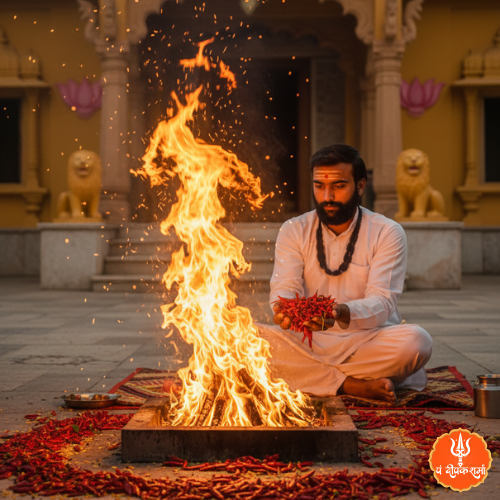
The term ‘Havan’ refers to a fire ritual where offerings are made into the sacred fire, symbolizing the transformation of material offerings into spiritual blessings. In the context of Baglamukhi, this ritual is particularly focused on invoking her power to silence enemies and remove obstacles, making it a powerful practice for devotees seeking relief from legal issues, competition, or personal conflicts.
Thus, the Chaitra Navratri Baglamukhi Havan serves as a bridge between the devotee and the divine, allowing for a deep spiritual connection that fosters inner strength and clarity. It is a time for purification, reflection, and devotion, where the energies of the goddess are believed to be especially potent.
How This Ritual Helps
The Chaitra Navratri Baglamukhi Havan is designed to channel the divine energies of Baglamukhi Mata, offering numerous benefits to the devotees who partake in it. Primarily, this ritual is known for its effectiveness in overcoming obstacles and achieving victory in challenging situations. Whether it is a court case, a competitive exam, or personal conflicts, the blessings of Baglamukhi Mata are sought to ensure success.
Moreover, the havan acts as a spiritual cleansing process, purifying the environment and the participants. The sacred fire symbolizes the removal of negativity and the manifestation of positive energies. As the offerings are made, the devotee’s intentions are sent forth into the universe, aligning their desires with the divine will of the goddess. This alignment is crucial for attracting success and harmony in one’s life.
Additionally, the ritual fosters a sense of community and shared devotion among participants. Engaging in the havan with family or friends strengthens bonds and creates a supportive environment, enhancing the overall spiritual experience. The collective energy generated during the ritual amplifies the prayers and intentions, making the havan even more powerful.
Mythological Background
Baglamukhi Mata is one of the ten Mahavidyas, representing the power of speech and the ability to control and silence enemies. According to Hindu mythology, she is often depicted as a goddess who wields a club and is seated on a tiger, symbolizing her strength and authority. The stories surrounding her emphasize her role as a protector and a guide, helping devotees navigate through life’s challenges with wisdom and courage.
One of the most famous legends associated with Baglamukhi involves the demon Madan, who was wreaking havoc on the heavens. The gods, unable to defeat him, turned to Baglamukhi for help. In a fierce battle, she subdued the demon, showcasing her power to silence adversaries and restore peace. This narrative reinforces the belief that invoking her blessings can lead to victory over one’s own challenges and enemies.
The Chaitra Navratri period is particularly significant as it marks the arrival of spring, a time of renewal and rejuvenation. During this time, the energies of the goddess are believed to be heightened, making it an ideal moment for performing the Baglamukhi Havan. Devotees engage in this ritual to honor her and seek her guidance, ensuring that they are protected and empowered to face life’s trials.
Who Should Perform This
The Chaitra Navratri Baglamukhi Havan is suitable for anyone facing challenges in their personal or professional life. Individuals involved in legal disputes, competitive exams, or those feeling overwhelmed by adversities can greatly benefit from this ritual. It is particularly recommended for those who have been experiencing prolonged difficulties and are seeking divine intervention to turn their fortunes around.
Moreover, this havan is also beneficial for individuals looking to enhance their communication skills and assertiveness. Baglamukhi Mata is known for her ability to empower devotees to speak their truth and stand firm against opposition. Thus, those who wish to improve their public speaking, negotiation skills, or leadership abilities may find this ritual especially helpful.
Families and communities can also participate in the havan together, fostering unity and collective strength. Engaging in this ritual as a group not only amplifies the energy of the prayers but also nurtures relationships and support systems among participants. Therefore, anyone seeking to invoke the blessings of Baglamukhi Mata for protection, success, and empowerment is encouraged to partake in the Chaitra Navratri Baglamukhi Havan.
Step-by-Step Vidhi (Very Detailed)
The Baglamukhi Havan is a sacred ritual that requires careful preparation and adherence to Vedic traditions. Below is a detailed step-by-step guide to performing this havan during Chaitra Navratri:
Preparation
Start by selecting an auspicious day during Chaitra Navratri for the havan. Cleanse the area where the havan will take place, ensuring it is free from any impurities. Set up a sacred space with an altar dedicated to Baglamukhi Mata, adorned with flowers, fruits, and other offerings. It is essential to create a serene environment conducive to spiritual practices.
Gathering Materials
Collect all necessary materials for the havan, including ghee (clarified butter), samagri (a mixture of sacred offerings), and wood for the fire. The samagri typically includes items like rice, barley, and various herbs. Ensure that all materials are pure and of high quality, as they will be offered to the goddess during the ritual.
Performing the Havan
Begin the havan by lighting the sacred fire in the havan kund (fire pit). As the flames rise, chant the appropriate mantras dedicated to Baglamukhi Mata. Offer the samagri and ghee into the fire while visualizing your intentions and desires being fulfilled. It is important to maintain focus and devotion throughout the ritual, allowing the energy of the goddess to flow through the offerings.
Continue chanting the mantras and offering materials into the fire, creating a sacred atmosphere filled with divine energy. The havan should be performed with sincerity and faith, as the vibrations created during this time are believed to attract the blessings of the goddess.
Concluding the Ritual
Once all offerings have been made, conclude the havan by performing aarti (a ceremonial worship with light) to Baglamukhi Mata. Express gratitude for her blessings and guidance. It is customary to distribute prasad (blessed food) among participants, symbolizing the sharing of divine grace. Finally, spend some time in meditation and reflection, allowing the energies of the havan to settle within.
Mantra for This Ritual
The primary mantra for the Chaitra Navratri Baglamukhi Havan is:
ॐ ह्लीं बगलामुखि सर्वविघ्न नाशाय ह्लीं
Transliteration: Om Hleem Baglamukhi Sarvavighna Nashaya Hleem
This mantra is a powerful invocation to Baglamukhi Mata, seeking her blessings to remove all obstacles and challenges. The syllable ‘Hleem’ is considered a bija mantra, representing the essence of the goddess’s energy. By chanting this mantra with devotion, devotees aim to align themselves with the divine will of Baglamukhi, inviting her presence into their lives.
Chanting this mantra during the havan serves multiple purposes. Firstly, it establishes a connection with the goddess, allowing devotees to express their intentions and desires. Secondly, it acts as a protective shield, warding off negativity and harmful influences. Lastly, the repetition of this mantra during the ritual enhances concentration and focus, enabling participants to immerse themselves fully in the spiritual experience.
In essence, the mantra encapsulates the essence of Baglamukhi Mata’s power, guiding devotees towards success, protection, and inner strength. Regular chanting of this mantra outside the havan can also be beneficial, serving as a reminder of the goddess’s presence in one’s life.
Do’s & Don’ts
When performing the Chaitra Navratri Baglamukhi Havan, it is essential to adhere to certain do’s and don’ts to ensure the ritual’s effectiveness and sanctity.
Do’s
- Perform the havan with a pure heart and sincere intentions.
- Dress in clean and traditional attire to honor the goddess.
- Use only pure and high-quality materials for the havan.
- Maintain a calm and focused mindset throughout the ritual.
- Invite family and friends to participate, fostering a sense of community.
Don’ts
- Avoid distractions and negative thoughts during the ritual.
- Do not consume alcohol or non-vegetarian food on the day of the havan.
- Refrain from using impure or low-quality materials for offerings.
- Do not rush through the ritual; take your time to connect with the divine.
- Avoid speaking ill of others or harboring negative feelings during the havan.
When to Perform
The Chaitra Navratri Baglamukhi Havan is ideally performed during the nine nights of Chaitra Navratri, which usually falls in March or April. Each day of Navratri is dedicated to a different aspect of the divine feminine, and the energies are particularly potent during this time. Devotees can choose to perform the havan on any of these days, but special significance is given to the final day, known as Ram Navami, which celebrates the birth of Lord Rama.
Additionally, the havan can be performed on specific auspicious days as per the Hindu calendar, such as during a full moon or on Fridays, which are considered favorable for worshiping the goddess. It is essential to consult a knowledgeable pandit or spiritual guide to determine the most auspicious timing for your specific circumstances.
Ultimately, the best time to perform the Chaitra Navratri Baglamukhi Havan is when the devotee feels a strong calling to connect with the goddess and seek her blessings. The sincerity of intention is what truly matters, and performing the ritual with devotion will yield the most profound results.
How Pandit Deepak Sharma can help
Pandit Deepak Sharma, with his extensive experience and deep understanding of Vedic rituals, plays a crucial role in facilitating the Chaitra Navratri Baglamukhi Havan. His expertise ensures that the havan is performed according to traditional practices, honoring the sanctity of the ritual and invoking the blessings of Baglamukhi Mata effectively.
By engaging Pandit Deepak Sharma for your havan, devotees can benefit from personalized guidance and support throughout the process. He provides insights into the significance of each step, helping participants connect more deeply with the ritual. His presence not only enhances the spiritual atmosphere but also instills confidence in devotees, knowing that they are following the correct Vedic procedures.
Moreover, Pandit Deepak Sharma can assist in tailoring the havan to meet specific needs, whether it is for legal issues, career growth, or personal challenges. His understanding of the nuances of Baglamukhi rituals allows him to offer valuable advice on mantras, offerings, and the overall approach to the havan, ensuring that devotees receive the maximum benefits from their spiritual practice.
Nalkheda Temple Connection
The Nalkheda Temple, dedicated to Baglamukhi Mata, is a revered pilgrimage site for devotees seeking her blessings. Located in the Agar Malwa district of Madhya Pradesh, this temple holds a special place in the hearts of many, especially during the Chaitra Navratri festival. The temple’s serene environment and sacred ambiance provide an ideal setting for performing the Baglamukhi Havan.
Visiting the Nalkheda Temple during Chaitra Navratri allows devotees to immerse themselves in the divine energies of Baglamukhi Mata. The temple is adorned with flowers and lights, creating a festive atmosphere that enhances the spiritual experience. Engaging in the havan at this sacred site amplifies the prayers and intentions, as the collective energy of fellow devotees contributes to the overall sanctity of the ritual.
Furthermore, the temple is known for its rich history and the stories of miraculous transformations experienced by devotees who have sought the blessings of Baglamukhi Mata. Many visit the temple with specific intentions, and the havan serves as a powerful means to align their desires with the divine will of the goddess. Thus, the Nalkheda Temple is not just a place of worship; it is a sanctuary for spiritual growth and transformation.