Meaning of This Ritual
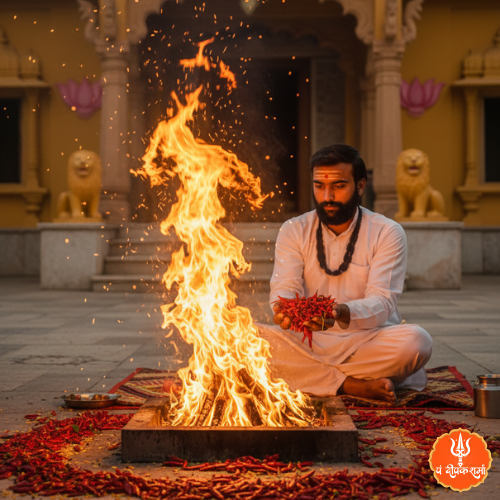
baglamukhi Havan is a sacred ritual dedicated to Devi Baglamukhi, one of the ten Mahavidyas in Hindu tradition. This havan is performed to invoke the divine blessings of the goddess, who is revered for her power to remove obstacles and grant victory over adversaries. The term ‘Havan’ refers to the fire ritual where offerings are made into the sacred fire, symbolizing the purification of the devotee’s intentions and desires. In the context of Baglamukhi, this ritual is particularly significant for those seeking protection from enemies, resolution of legal issues, or success in competitive endeavors.
The essence of this ritual lies in its ability to channel divine energy through the fire, creating a sacred atmosphere that enhances the devotee’s spiritual connection with the goddess. The offerings made during the havan, including ghee, grains, and herbs, are believed to carry the devotee’s prayers to the divine realm, ensuring that their wishes are heard and fulfilled. Thus, understanding the meaning behind Baglamukhi Havan is crucial for anyone looking to engage in this powerful spiritual practice.
How This Ritual Helps
Engaging in Baglamukhi Havan offers numerous benefits, particularly for those facing challenges in their personal or professional lives. One of the primary purposes of this ritual is to seek the goddess’s intervention in overcoming enemies and adversities. By performing the havan, devotees can invoke the protective energies of Baglamukhi, who is known to silence and subdue adversaries, ensuring peace and harmony in their lives.
Furthermore, Baglamukhi Havan is also performed for legal matters, helping devotees gain favorable outcomes in court cases. The ritual is believed to enhance the devotee’s chances of legal victory by invoking divine support and guidance. Many have experienced positive results after performing this havan, as it aligns their intentions with the cosmic energies of justice and truth.
Additionally, the havan serves as a means of spiritual purification, allowing devotees to cleanse their minds and hearts of negativity. The act of offering to the fire symbolizes the surrender of one’s ego and desires, fostering a sense of humility and devotion. This purification process not only aids in personal growth but also strengthens the devotee’s connection to the divine, making them more receptive to blessings and guidance.
Mythological Background
The mythology surrounding Devi Baglamukhi is rich and profound, rooted in ancient texts and traditions. According to Hindu scriptures, Baglamukhi is one of the ten Mahavidyas, embodying the power of knowledge and wisdom. She is often depicted as a beautiful goddess adorned in yellow, symbolizing prosperity and abundance. Her fierce demeanor represents her ability to protect her devotees from harm and adversities.
One of the most significant myths associated with Baglamukhi involves her role in the battle against evil forces. It is said that when the gods were threatened by demons, they sought the help of Baglamukhi. In response, she manifested her divine power, silencing the demons and restoring balance to the universe. This act of subduing evil showcases her strength and protective nature, making her a revered figure among devotees seeking protection and victory.
Furthermore, Baglamukhi is often associated with the concept of ‘Shakti,’ or divine feminine energy. She represents the power of speech and communication, which is why her worship is particularly beneficial for those involved in legal matters or public speaking. The stories of her victories over adversaries serve as a reminder of the strength that lies within each devotee, encouraging them to seek her blessings for overcoming challenges in their lives.
Who Should Perform This
Baglamukhi Havan is particularly beneficial for individuals facing challenges related to enemies, legal disputes, or competitive situations. Those who feel threatened by adversaries, whether in personal relationships or professional environments, can greatly benefit from this ritual. It is also recommended for individuals involved in legal battles, as the havan is believed to enhance their chances of success in court.
Moreover, anyone seeking spiritual growth and purification can engage in this havan. The ritual serves as a means of aligning oneself with divine energies, fostering a deeper connection with the goddess. It is suitable for devotees of all backgrounds, whether they are seasoned practitioners or newcomers to the spiritual path.
Additionally, individuals preparing for important exams or competitions may find this ritual helpful. By invoking the blessings of Baglamukhi, they can enhance their focus, clarity, and confidence, which are essential for success in competitive scenarios. Thus, anyone looking to overcome obstacles or achieve their goals can consider performing Baglamukhi Havan.
Step-by-Step Vidhi (Very Detailed)
The procedure for performing Baglamukhi Havan is steeped in tradition and requires careful adherence to Vedic guidelines. The following steps outline the detailed vidhi for this sacred ritual:
Preparation
Before commencing the havan, it is essential to prepare the space. Choose a clean and sacred area, preferably in the home or temple, where the havan can be performed without distractions. Gather all necessary materials, including a havan kund (fire pit), ghee, samagri (offerings), and the required mantras. It is advisable to wear clean, traditional attire to maintain the sanctity of the ritual.
Invocation of Deities
Begin the ritual by invoking the presence of Devi Baglamukhi. Light a lamp and offer flowers to the goddess’s idol or picture. Chant the following mantra to invite her blessings: ॐ ह्लीं बगलामुखि सर्वविघ्न नाशाय ह्लीं (Om Hleem Baglamukhi Sarvavighna Nashaya Hleem). This mantra is a powerful invocation that calls upon the goddess to remove all obstacles and grant success.
Performing the Havan
Once the invocation is complete, proceed to the havan kund. Light the fire using ghee and samagri, ensuring that the flames are bright and pure. As the fire burns, offer the samagri into the flames while chanting the appropriate mantras. Each offering should be accompanied by a heartfelt prayer, expressing your intentions and desires. Continue this process for a specified duration, typically around 30 to 60 minutes, allowing the energy of the ritual to build and resonate.
Concluding the Ritual
After completing the offerings, conclude the havan by performing aarti (waving of light) in front of the goddess. Thank her for her presence and blessings, and seek her guidance for the future. It is customary to distribute prasad (blessed food) among family members and participants, symbolizing the sharing of divine blessings. Finally, maintain a sense of gratitude and devotion, reflecting on the experience and the intentions set during the ritual.
Mantra for This Ritual
The primary mantra associated with Baglamukhi Havan is: ॐ ह्लीं बगलामुखि सर्वविघ्न नाशाय ह्लीं. (Om Hleem Baglamukhi Sarvavighna Nashaya Hleem).
This mantra is a powerful invocation that seeks the blessings of Devi Baglamukhi for the removal of obstacles and challenges. The syllable ‘Hleem’ is considered to be a bija (seed) mantra, representing the essence of the goddess’s energy. By chanting this mantra with devotion, devotees can align themselves with the protective and empowering energies of Baglamukhi.
In essence, the mantra serves as a bridge between the devotee and the divine, facilitating communication and connection. It is recommended to chant this mantra during the havan, as well as in daily prayers, to enhance one’s spiritual practice and invite the goddess’s blessings into their life. The repetition of this mantra fosters a sense of focus and intention, making it a vital component of the Baglamukhi Havan ritual.
Do’s & Don’ts
Engaging in Baglamukhi Havan requires adherence to certain guidelines to ensure the ritual’s effectiveness. Here are some essential do’s and don’ts to consider:
Do’s
- Perform the havan with a pure heart and focused mind, free from distractions.
- Use high-quality materials for the offerings, ensuring they are fresh and pure.
- Maintain cleanliness in the space where the havan is conducted, as purity enhances the energy of the ritual.
- Invite family members to participate, as collective energy can amplify the effects of the havan.
- Express gratitude to Devi Baglamukhi after the ritual, acknowledging her blessings and guidance.
Don’ts
- Avoid performing the havan during inauspicious timings or days, as this may hinder the ritual’s effectiveness.
- Do not engage in negative thoughts or actions before or during the ritual, as this can disrupt the energy flow.
- Refrain from using impure or stale materials for the offerings, as this can diminish the sanctity of the ritual.
- Do not rush through the process; take your time to connect with the divine and express your intentions sincerely.
- Avoid discussing negative or harmful topics during the ritual, as this can create a discordant atmosphere.
When to Perform
Baglamukhi Havan can be performed at any time, but certain auspicious days and timings are particularly favorable. It is recommended to conduct the ritual on Tuesdays or during the waxing phase of the moon, as these times are believed to enhance the potency of the havan.
Additionally, performing the havan during significant festivals dedicated to Devi Baglamukhi, such as Navratri, can amplify its effects. These occasions are considered auspicious for invoking the goddess’s blessings and seeking her protection and guidance.
Ultimately, the best time to perform Baglamukhi Havan is when the devotee feels a strong calling or need for divine intervention. Listening to one’s intuition and aligning the ritual with personal circumstances can lead to a more profound and meaningful experience.
How Pandit Deepak Sharma can help
Pandit Deepak Sharma, an experienced Vedic practitioner, specializes in performing Baglamukhi rituals, including havans and anushthans. With over 25 years of experience, he possesses a deep understanding of the Vedic scriptures and the intricacies of ritual performance. His guidance ensures that the havan is conducted with authenticity and adherence to traditional practices.
By consulting with Pandit Deepak Sharma, devotees can receive personalized advice on the best approach to performing Baglamukhi Havan. He can provide insights into the appropriate materials, timings, and mantras to enhance the effectiveness of the ritual. His compassionate and knowledgeable approach fosters a sense of trust and reassurance, allowing devotees to engage in the ritual with confidence.
Furthermore, Pandit Deepak Sharma’s presence during the havan can amplify the energy and blessings of the ritual. His experience in conducting these sacred ceremonies ensures that every aspect is executed with precision and devotion, allowing devotees to connect deeply with Devi Baglamukhi and receive her divine grace.
Nalkheda Temple Connection
The Nalkheda Temple, dedicated to Devi Baglamukhi, holds immense significance for devotees seeking her blessings. Located in the Agar Malwa district of Madhya Pradesh, this temple is a revered pilgrimage site for those looking to perform Baglamukhi Havan and other rituals. The temple’s serene environment and sacred atmosphere enhance the spiritual experience for visitors.
At the Nalkheda Temple, devotees can participate in various rituals, including Baglamukhi Havan, under the guidance of experienced priests like Pandit Deepak Sharma. The temple serves as a hub for spiritual seekers, offering a space for prayer, reflection, and connection with the divine. Many devotees have reported transformative experiences after visiting the temple and engaging in the rituals performed there.
Additionally, the temple’s historical and mythological significance adds to its allure. It is believed that the goddess herself blesses the devotees who visit with pure intentions, making it a must-visit destination for those seeking spiritual growth and protection. The connection between the temple and the Baglamukhi Havan ritual is profound, as the temple serves as a conduit for divine blessings and guidance.