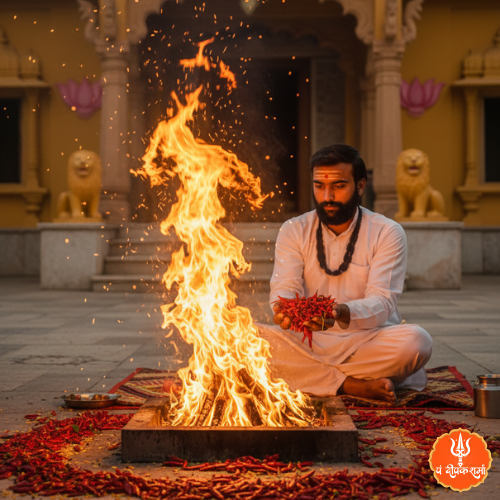
Meaning of This Ritual
The baglamukhi Havan is a sacred ritual dedicated to Devi Baglamukhi, one of the ten Mahavidyas, revered for her power to control and eliminate enemies. This ritual is performed to invoke the divine blessings of the goddess, seeking her protection and guidance in overcoming obstacles, especially in legal matters and conflicts. The essence of this havan lies in its ability to channel spiritual energy to aid devotees in their struggles, ensuring that they emerge victorious in their endeavors.
In essence, the Baglamukhi Havan symbolizes the removal of negativity and the establishment of peace and harmony in one’s life. It is a profound act of devotion that not only seeks the goddess’s blessings but also serves as a means of self-purification and spiritual growth. The rituals performed during the havan are steeped in tradition, invoking the sacred energies that Baglamukhi embodies, thus creating a powerful atmosphere for transformation.
Through this ritual, devotees express their surrender to the divine will, seeking guidance and strength to face adversities. It is a reminder of the importance of faith and devotion in navigating the complexities of life, reinforcing the belief that with the goddess’s grace, any challenge can be overcome.
How This Ritual Helps
The Baglamukhi Havan is particularly beneficial for those facing legal challenges or conflicts with adversaries. By performing this ritual, devotees seek to invoke the goddess’s power to silence their enemies and secure victory in court cases. The havan is designed to create a protective shield around the devotee, ensuring that they are safeguarded from negative influences and harmful energies.
Moreover, the ritual serves as a means of spiritual cleansing, helping individuals release their fears and anxieties. This purification process allows devotees to approach their challenges with a clear mind and a focused heart. The vibrations created during the havan resonate with the energies of Baglamukhi, empowering devotees to stand firm against opposition and emerge victorious.
In addition to legal matters, the Baglamukhi Havan can also aid in personal conflicts, whether they be in relationships or professional settings. By invoking the goddess’s blessings, individuals can find resolution and peace, fostering an environment of understanding and cooperation. The ritual thus acts as a catalyst for positive change, guiding devotees towards a path of success and fulfillment.
Mythological Background
Devi Baglamukhi is one of the ten Mahavidyas, a group of powerful goddesses in Hindu mythology. She is often depicted as a radiant figure, holding a tongue in her hand, symbolizing her ability to control speech and silence adversaries. The mythology surrounding Baglamukhi is rich and profound, emphasizing her role as a protector and a source of wisdom.
According to ancient texts, Baglamukhi emerged from the collective energy of the other Mahavidyas to defeat the demon Madhu-Kaitabh, who threatened the cosmic order. Her fierce determination and unwavering strength exemplify the qualities of a true warrior goddess. As a result, she is revered not only for her power to vanquish enemies but also for her ability to bestow wisdom and clarity upon her devotees.
The stories of Baglamukhi highlight her compassionate nature, as she is known to grant boons to those who sincerely seek her blessings. This aspect of her mythology reinforces the belief that through devotion and faith, one can attain divine intervention in times of need. The Baglamukhi Havan, therefore, serves as a means to connect with this powerful goddess, inviting her presence into the lives of devotees.
Who Should Perform This
The Baglamukhi Havan is particularly beneficial for individuals facing legal disputes, conflicts with enemies, or those seeking protection from negative influences. Anyone who feels overwhelmed by adversities or is in need of divine intervention in their personal or professional life can benefit from this ritual. It is especially recommended for those involved in court cases or legal matters, as the blessings of Baglamukhi can help secure favorable outcomes.
Moreover, this havan is suitable for individuals who wish to enhance their spiritual growth and seek clarity in their lives. Those who feel lost or confused may find solace in the ritual, as it provides a structured approach to invoking divine guidance. The act of performing the havan serves as a reminder of the importance of faith and devotion, encouraging individuals to trust in the process of life.
Families facing ongoing conflicts or challenges may also consider performing the Baglamukhi Havan together, as it fosters unity and collective strength. By coming together in devotion, families can create a harmonious environment, inviting peace and understanding into their lives. Ultimately, anyone with a sincere heart and a desire for positive change can partake in this sacred ritual.
Step-by-Step Vidhi (Very Detailed)
To perform the Baglamukhi Havan, it is essential to follow a detailed Vedic procedure that honors the traditions and rituals associated with the goddess. The following steps outline the process:
Preparation
Begin by selecting an auspicious date and time for the havan, preferably during a favorable lunar phase. Cleanse the space where the havan will be conducted, ensuring it is free from any negativity. Set up a dedicated altar for Devi Baglamukhi, adorned with her idol or picture, flowers, and other offerings. Gather all necessary materials, including ghee, havan samagri, and sacred herbs.
Invocation of the Goddess
Once the altar is prepared, light a lamp and incense to create a sacred atmosphere. Begin the ritual by chanting the Ganesh Vandana to seek the blessings of Lord Ganesha for the removal of obstacles. Follow this with the invocation of Devi Baglamukhi, reciting her mantras and offering flowers and sweets to her. This step is crucial, as it establishes a connection with the goddess and invites her presence into the ritual.
Performing the Havan
With the altar set and the goddess invoked, proceed to perform the havan. Place the havan kund (fire pit) in front of the altar and light the sacred fire using dry wood and ghee. As the flames rise, offer havan samagri into the fire while chanting the Baglamukhi mantras. The primary mantra for this ritual is ॐ ह्लीं बगलामुखि सर्वविघ्न नाशाय ह्लीं (Om Hleem Baglamukhi Sarva Vighna Nashaya Hleem), which invokes the goddess’s blessings for the removal of obstacles.
Concluding the Ritual
After completing the offerings, allow the fire to burn for a while, allowing the energy to permeate the surroundings. Once the havan is concluded, offer aarti to Devi Baglamukhi, expressing gratitude for her blessings. Distribute prasad among family members and participants, reinforcing the sense of community and shared devotion. Finally, conclude the ritual with a prayer for peace and harmony in your life.
Mantra for This Ritual
The mantra associated with the Baglamukhi Havan is ॐ ह्लीं बगलामुखि सर्वविघ्न नाशाय ह्लीं. This powerful mantra serves as a medium to connect with the divine energy of Baglamukhi, invoking her blessings for the removal of obstacles and challenges.
Transliteration: Om Hleem Baglamukhi Sarva Vighna Nashaya Hleem. The meaning of this mantra is profound; it calls upon the goddess to eliminate all forms of hindrances and obstacles that may be obstructing the devotee’s path. The repetition of this mantra during the havan amplifies the energy and intention behind the ritual, creating a powerful resonance that reaches the divine.
Chanting this mantra with devotion and sincerity can lead to spiritual awakening and clarity. It serves as a reminder of the goddess’s protective nature, encouraging devotees to trust in her guidance. The mantra is not just a tool for seeking help but also a means of cultivating inner strength and resilience in the face of challenges.
Do’s & Don’ts
When performing the Baglamukhi Havan, it is essential to adhere to certain guidelines to ensure the ritual’s effectiveness. Among the do’s, it is important to approach the ritual with a pure heart and sincere intentions. Cleanliness is paramount; both the physical space and the mind should be free from negativity. Offerings should be made with devotion, and participants should engage in the chanting of mantras with focus and reverence.
On the other hand, there are several don’ts to keep in mind. Avoid performing the havan in a cluttered or unclean environment, as this can hinder the flow of energy. It is also advisable to refrain from engaging in negative thoughts or actions during the ritual, as this can counteract the positive intentions behind the havan. Lastly, do not rush through the rituals; take the time to connect with the divine and allow the energy to manifest fully.
When to Perform
The Baglamukhi Havan can be performed at any time, but certain auspicious occasions enhance its effectiveness. It is particularly beneficial to conduct the havan during the waxing moon phase, as this is considered a time of growth and positive energy. Additionally, performing the ritual on Tuesdays or Fridays, which are sacred to Devi Baglamukhi, can amplify the blessings received.
Devotees may also choose to perform the havan during significant life events, such as before starting a new job, entering a new home, or facing legal challenges. These moments often carry heightened emotions and energies, making them ideal for invoking the goddess’s blessings. Ultimately, the best time to perform the havan is when the devotee feels a sincere need for divine intervention and guidance.
Nalkheda Temple Connection
The Nalkheda Temple, located in the Agar Malwa district of Madhya Pradesh, is a revered site for devotees of Baglamukhi. This temple is known for its rich history and spiritual significance, attracting pilgrims from far and wide. The temple’s ambiance is infused with divine energy, making it an ideal place for performing the Baglamukhi Havan.
Visiting the Nalkheda Temple offers devotees a unique opportunity to connect with the goddess in her sacred abode. The temple is adorned with beautiful idols and intricate carvings, creating a serene environment for prayer and reflection. Many devotees report experiencing profound spiritual awakenings during their visits, reinforcing the belief in the goddess’s protective and guiding presence.
For those unable to visit the temple, performing the Baglamukhi Havan at home, while invoking the energy of Nalkheda, can still yield significant benefits. The connection to the temple enhances the ritual’s potency, allowing devotees to draw upon the divine energies present in this sacred space.
FAQ
What is the significance of the Baglamukhi Havan?
The Baglamukhi Havan holds immense significance as it is dedicated to Devi Baglamukhi, who is revered for her power to control enemies and remove obstacles. This ritual is particularly beneficial for those facing legal challenges or conflicts, as it invokes the goddess’s blessings for protection and victory. The havan serves as a means of spiritual purification, helping devotees release negativity and approach their challenges with clarity and strength.
How often should one perform the Baglamukhi Havan?
The frequency of performing the Baglamukhi Havan can vary based on individual needs and circumstances. It is advisable to conduct the havan during significant life events, such as starting a new job or facing legal issues. Additionally, performing the havan during auspicious lunar phases can enhance its effectiveness. Ultimately, devotees should listen to their inner guidance and perform the ritual whenever they feel the need for divine intervention.
Can the Baglamukhi Havan be performed at home?
Yes, the Baglamukhi Havan can be performed at home, provided that the necessary preparations are made to create a sacred environment. It is essential to cleanse the space and gather all required materials for the ritual. Invoking the energy of Devi Baglamukhi during the havan can still yield significant benefits, allowing devotees to connect with the goddess even in their own homes. However, visiting the Nalkheda Temple for the havan can enhance the experience and connection to the divine.
What materials are needed for the Baglamukhi Havan?
To perform the Baglamukhi Havan, several materials are required, including ghee, havan samagri, and sacred herbs. Additionally, flowers, sweets, and offerings for the goddess should be prepared. A havan kund (fire pit) is essential for conducting the ritual, along with a lamp and incense to create a sacred atmosphere. Gathering these materials in advance ensures a smooth and focused ritual experience.
Recommended Reading / Further Exploration
- Complete Guide to Baglamukhi Mirchi Havan for Court Case
- Understanding Baglamukhi Havan for Spiritual Protection and Success
- Mirchi Havan Nalkheda for Small Businesses: Practical Implementation
- Baglamukhi Anushthan Nalkheda for Small Businesses: Practical Implementation
- Shatru Nash Baglamukhi Puja for Small Businesses: Practical Implementation