Meaning of This Ritual
The baglamukhi Anushthan is a profound spiritual practice dedicated to Devi Baglamukhi, one of the ten Mahavidyas in Hindu tradition. This ritual is performed to invoke the divine blessings of the goddess, who is revered for her power to grant victory over adversities, especially in legal matters and conflicts. The term ‘Anushthan’ signifies a disciplined and dedicated practice, where devotees engage in specific rituals and mantras to achieve desired outcomes. It is believed that through sincere devotion and adherence to the prescribed Vedic procedures, one can attain the grace of Baglamukhi Mata, leading to resolution of disputes and enhancement of personal strength.
In the context of Ujjain, a city steeped in spiritual significance, the Baglamukhi Anushthan holds a special place. Ujjain is known for its temples and sacred sites, making it an ideal location for performing this ritual. The essence of the Anushthan lies in its ability to transform the devotee’s life, providing clarity, strength, and protection against negative influences. By engaging in this ritual, devotees not only seek blessings for themselves but also for their families and loved ones, fostering a sense of community and shared spirituality.
How This Ritual Helps
The Baglamukhi Anushthan is particularly beneficial for those facing challenges in legal matters, personal conflicts, or any situation where they feel overwhelmed by adversaries. The goddess Baglamukhi is known for her ability to silence enemies and bring about justice. By performing this Anushthan, devotees can expect to experience a sense of empowerment and relief from the burdens of negativity and opposition. The ritual acts as a protective shield, allowing individuals to navigate through life’s challenges with confidence and grace.
Moreover, the Anushthan is not limited to just resolving conflicts; it also enhances the devotee’s overall well-being. Many practitioners have reported improvements in their personal and professional lives post-ritual. The blessings of Baglamukhi Mata instill a sense of purpose and direction, guiding devotees towards making wise decisions. This spiritual practice fosters inner strength, enabling individuals to face adversities with a calm mind and a resolute heart.
Mythological Background
According to Hindu mythology, Devi Baglamukhi is one of the ten Mahavidyas, embodying the power of speech and knowledge. She is often depicted as a beautiful woman adorned with yellow garments, symbolizing the richness of wisdom and intellect. Her divine energy is believed to control the forces of nature and the universe, making her a formidable protector against evil forces. The stories surrounding her are filled with instances where she has intervened to protect her devotees from harm and injustice.
One of the most famous legends associated with Baglamukhi is her battle against the demon Madhu-Kaitabh. When these demons threatened the cosmic order, it was Baglamukhi who intervened, using her divine powers to subdue them. This act of valor not only restored balance but also established her as a goddess of victory and justice. Devotees believe that by invoking her through the Anushthan, they can tap into this divine energy and seek her protection in their own battles against negativity and adversity.
Who Should Perform This
The Baglamukhi Anushthan is suitable for anyone who feels the need for protection from adversaries or is facing challenges in their personal or professional life. It is particularly recommended for individuals involved in legal disputes, competitive situations, or those who feel oppressed by negative energies. Additionally, anyone seeking to enhance their spiritual strength and clarity of thought can benefit from this ritual. The Anushthan is open to all, regardless of their background or spiritual experience.
Moreover, families often come together to perform this Anushthan, seeking collective blessings for harmony and protection. It is believed that when performed with sincerity and devotion, the effects of the ritual extend beyond the individual, positively impacting the entire household. Thus, anyone looking to foster peace, strength, and protection in their lives is encouraged to engage in the Baglamukhi Anushthan.
Step-by-Step Vidhi (Very Detailed)
The Vidhi for the Baglamukhi Anushthan is a sacred process that requires careful adherence to Vedic traditions. Here is a detailed step-by-step guide to performing this ritual:
Preparation
Begin by selecting an auspicious day for the Anushthan. It is advisable to consult a knowledgeable pandit to determine the most favorable time. Cleanse the space where the ritual will be performed, ensuring it is free from any distractions. Set up a small altar with a picture or idol of Devi Baglamukhi, along with offerings such as yellow flowers, sweets, and fruits. Prepare a sacred space by lighting a diya (lamp) and incense, creating an atmosphere conducive to spiritual practice.
Invocation of the Goddess
Once the altar is prepared, sit in a comfortable position facing the idol or picture of Baglamukhi. Begin the ritual by chanting the Ganesh Vandana to seek the blessings of Lord Ganesha for the successful completion of the Anushthan. Following this, invoke Devi Baglamukhi by chanting her mantra, which is: ॐ ह्लीं बगलामुखि सर्वविघ्न नाशाय ह्लीं. This mantra should be recited with devotion and focus, visualizing the goddess’s presence and seeking her blessings.
Performing the Havan
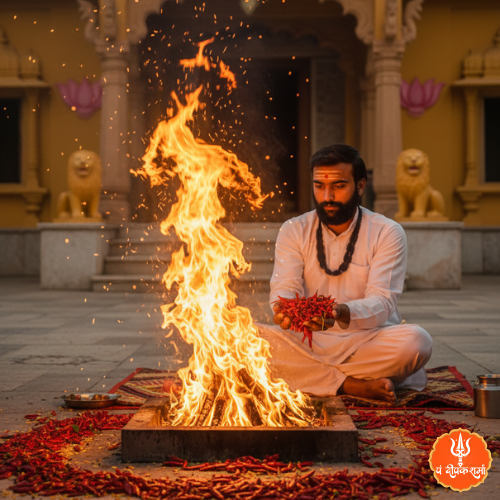
The next step involves performing the Havan, a sacred fire ritual that is integral to the Anushthan. Prepare a Havan kund (fire pit) and place the necessary materials such as ghee, samagri (mix of herbs and grains), and wood. As the fire is lit, offer the samagri into the flames while chanting the Baglamukhi mantra. This process symbolizes the offering of one’s troubles and desires to the divine fire, allowing the goddess to accept and transform them. Continue this process for a specified number of times, usually 108, to enhance the potency of the ritual.
Concluding the Ritual
After completing the Havan, conclude the Anushthan by expressing gratitude to Devi Baglamukhi. Offer the remaining sweets and fruits as prasad (blessed food) to family members and participants. It is essential to maintain a peaceful and reflective mindset throughout the ritual, allowing the energy of the Anushthan to resonate within you. Finally, share the experience and blessings received with others, fostering a sense of community and shared spirituality.
Mantra for This Ritual
The primary mantra for the Baglamukhi Anushthan is: ॐ ह्लीं बगलामुखि सर्वविघ्न नाशाय ह्लीं. In transliteration, it reads as: Om Hleem Baglamukhi Sarva Vighna Nashaya Hleem. This powerful mantra is dedicated to invoking the blessings of Devi Baglamukhi to remove all obstacles and grant victory over adversities.
The meaning of this mantra is profound. The syllable ‘ॐ’ represents the universal sound, the essence of the ultimate reality. ‘ह्लीं’ (Hleem) is a bija mantra, symbolizing the energy of the goddess. ‘बगलामुखि’ refers to the goddess herself, while ‘सर्वविघ्न’ means all obstacles or challenges. ‘नाशाय’ signifies the act of destruction or removal. Thus, the mantra collectively calls upon Devi Baglamukhi to eliminate all hindrances and grant the devotee success in their endeavors.
Chanting this mantra with devotion and focus can lead to profound spiritual experiences. It is recommended to recite it daily, especially during the Anushthan, to deepen the connection with the goddess. The vibrations of the mantra resonate with the energies of the universe, aligning the devotee’s intentions with divine will. Regular practice can enhance one’s spiritual strength and clarity, making it a vital component of the Baglamukhi Anushthan.
Do’s & Don’ts
When engaging in the Baglamukhi Anushthan, certain guidelines should be followed to ensure the ritual’s effectiveness. Among the do’s, it is essential to maintain a pure and focused mindset throughout the process. Devotees should wear clean and preferably yellow attire, as yellow is associated with the goddess. It is also advisable to perform the Anushthan in a quiet and sacred space, free from distractions. Offering sincere prayers and maintaining a positive attitude will enhance the energy of the ritual.
Conversely, there are several don’ts to be mindful of. Avoid using foul language or engaging in negative thoughts during the ritual, as this can disrupt the spiritual energy. It is also important not to consume non-vegetarian food or alcohol on the day of the Anushthan, as these can hinder the connection with the divine. Lastly, refrain from rushing through the rituals; each step should be performed with care and devotion, allowing the energy to flow naturally.
When to Perform
The Baglamukhi Anushthan can be performed on any day, but certain auspicious occasions enhance its effectiveness. It is particularly beneficial to conduct the ritual during the waxing phase of the moon, as this is a time of growth and positivity. Additionally, special festivals dedicated to Devi Baglamukhi, such as Navratri, are ideal for performing the Anushthan, as the energies of the goddess are believed to be heightened during these times.
Consulting a knowledgeable pandit can provide further insights into the most favorable timings for the ritual. By aligning the Anushthan with auspicious dates, devotees can maximize the blessings and spiritual benefits received from Devi Baglamukhi. Ultimately, the sincerity of the devotee’s intention is what matters most, and the Anushthan can be performed whenever one feels the need for divine intervention.
Nalkheda Temple Connection
The Nalkheda Baglamukhi Temple, located in Madhya Pradesh, is a significant pilgrimage site for devotees of Devi Baglamukhi. This temple is renowned for its spiritual ambiance and the powerful energy that resonates within its premises. Many devotees visit the temple to perform the Baglamukhi Anushthan, seeking the goddess’s blessings for various aspects of their lives, including legal matters, career growth, and protection from adversaries.
At the Nalkheda Temple, the rituals are conducted following strict Vedic traditions, ensuring that devotees receive authentic spiritual experiences. The temple is managed by experienced pandits, including Pandit Deepak Sharma, who guide devotees through the Anushthan process, ensuring that every step is performed with precision and devotion. The connection to this sacred site enhances the spiritual significance of the Anushthan, allowing devotees to immerse themselves in the divine energy of Baglamukhi Mata.
FAQ
What is the significance of the Baglamukhi Anushthan?
The Baglamukhi Anushthan holds immense significance for devotees seeking protection and victory over adversities. It is a ritual dedicated to invoking the blessings of Devi Baglamukhi, who is known for her power to silence enemies and grant justice. By performing this Anushthan, devotees aim to remove obstacles in their lives, particularly in legal matters and personal conflicts. The ritual serves as a means to connect with the divine, fostering a sense of empowerment and clarity.
Can anyone perform the Baglamukhi Anushthan?
Yes, the Baglamukhi Anushthan is open to all individuals, regardless of their spiritual background or experience. It is particularly beneficial for those facing challenges in their lives, such as legal disputes or conflicts with others. Families often come together to perform this ritual, seeking collective blessings for harmony and protection. The sincerity and devotion of the participant are what truly matter in this sacred practice.
How long does the Baglamukhi Anushthan take?
The duration of the Baglamukhi Anushthan can vary depending on the specific rituals performed and the number of participants. Typically, the Anushthan may take several hours, especially if it includes the Havan. It is essential to approach the ritual with patience and dedication, allowing the energy to flow naturally. Engaging in the Anushthan with a calm and focused mindset enhances the overall experience.
What offerings are made during the Anushthan?
During the Baglamukhi Anushthan, various offerings are made to the goddess, including yellow flowers, sweets, and fruits. These offerings symbolize devotion and gratitude towards Devi Baglamukhi. Additionally, during the Havan, samagri (a mix of herbs and grains) is offered into the sacred fire, representing the surrender of one’s troubles and desires to the divine. The offerings are an integral part of the ritual, enhancing the connection with the goddess.
Is it necessary to have a pandit perform the Anushthan?
While it is not mandatory to have a pandit perform the Baglamukhi Anushthan, seeking guidance from an experienced pandit can enhance the authenticity and effectiveness of the ritual. A knowledgeable pandit, such as Pandit Deepak Sharma, ensures that the rituals are conducted according to Vedic traditions, maximizing the blessings received from Devi Baglamukhi. However, individuals can also perform the Anushthan on their own if they feel spiritually inclined and prepared.
What should I do after completing the Anushthan?
After completing the Baglamukhi Anushthan, it is essential to express gratitude to Devi Baglamukhi for the blessings received. Sharing the prasad (blessed food) with family and friends fosters a sense of community and shared spirituality. It is also advisable to maintain a positive mindset and continue chanting the Baglamukhi mantra regularly, deepening the connection with the goddess. Reflecting on the experiences and insights gained during the Anushthan can further enhance its spiritual benefits.
Recommended Reading / Further Exploration
- Baglamukhi Havan for Spiritual Protection and Success
- Advanced Concepts of Baglamukhi Puja by Deepak Sharma (Explained Clearly)
- Advanced Concepts of Nalkheda Baglamukhi Temple Rituals (Explained Clearly)
- Real-World Use Cases of Baglamukhi Specialist Deepak Sharma
- Complete Guide to Legal Victory Havan